
Keeping a trading journal has long been considered essential for traders aiming to refine their strategies and improve performance. Traditionally, this meant manually logging every trade, noting down key details, and analyzing patterns over time. However, this process is not only time-consuming but also prone to human error and lacks real-time insights.
With advancements in technology, AI trade journaling has emerged as a game-changer. An automated trading journal leverages artificial intelligence to track, categorize, and analyze trades seamlessly—eliminating the need for manual input. By integrating AI, traders can now gain deeper insights, reduce bias, and make data-driven decisions effortlessly.
This shift from manual logs to AI-powered automation is revolutionizing how traders document their activities, making the process more efficient, accurate, and insightful. The era of AI trade journaling is here, empowering traders with smart, real-time analytics that enhance decision-making and optimize trading strategies.
The Challenges of Manual Trade Journaling
For many traders, maintaining a trading journal manually is easier said than done. While journaling is essential for tracking performance and refining strategies, the reality is that traders often struggle with consistency. Manually logging every trade is tedious, time-consuming, and easily overlooked—especially during high-pressure trading sessions.
Beyond the inconvenience, manual journaling is also prone to human error. Traders may forget to record certain trades, miscalculate profits and losses, or unintentionally introduce bias into their analysis. These errors lead to inaccurate insights, making it difficult to identify strengths, weaknesses, and potential improvements in trading strategies.
Another critical limitation of traditional journaling is the lack of real-time insights and analysis. Manually reviewing past trades requires additional time and effort, and by the time traders analyze their notes, market conditions may have already changed. Without real-time data processing, traders miss out on valuable insights that could enhance decision-making on the spot.
This is where AI trade journaling and an automated trading journal offer a game-changing solution. By leveraging AI, traders can eliminate the burden of manual record-keeping, minimize errors, and gain instant, data-driven insights, allowing them to focus on optimizing their strategies and making informed trading decisions in real time.
Track, analyze, and improve your trades with Journalio by AryaMerxs! Turn your trading journal into a roadmap for success.
How AI & Bots Are Transforming Trade Journaling
The world of trading is evolving rapidly, and so is the way traders document and analyze their performance. Traditional journaling methods are being replaced by AI trade journaling, which offers a smarter, faster, and more efficient approach to tracking trades. With the rise of AI and automation, traders no longer need to rely on manual data entry or spend hours analyzing their trades. Instead, they can leverage an automated trading journal to streamline the process and gain valuable insights in real time.

Seamless Integration with Brokerage Accounts
One of the most significant advantages of an automated trading journal is its ability to integrate directly with brokerage accounts. Unlike manual logging, which requires constant effort and discipline, AI-powered systems automatically track and record every trade. This seamless integration ensures that all trades are accurately documented, eliminating the risk of missing or incorrect entries. With this automation, traders can focus on refining their strategies rather than worrying about keeping their journals up to date.
AI-Driven Insights: Pattern Recognition, Risk Assessment, and Behavioral Analysis
A major limitation of traditional journaling is its reliance on the trader’s own ability to analyze patterns and identify trends. AI changes this by offering AI-driven insights that go beyond basic trade tracking. These intelligent systems use pattern recognition algorithms to detect recurring trends in trading behavior, providing traders with data-backed recommendations.
Additionally, AI helps with risk assessment by identifying overexposed positions, potential drawdowns, and areas where traders might be taking unnecessary risks. Instead of relying on hindsight, traders can make real-time adjustments based on AI-generated risk metrics.
Another powerful feature of AI trade journaling is behavioral analysis. Many traders fall into emotional trading patterns, such as revenge trading or overtrading after a loss. AI can identify these tendencies and provide alerts, helping traders maintain discipline and avoid costly mistakes.
Eliminating Emotional Bias with AI-Driven Journaling
Emotional decision-making is one of the biggest obstacles to long-term trading success. Fear, greed, and impatience often lead traders to make impulsive moves that deviate from their strategies. An automated trading journal removes this bias by offering an objective, data-driven perspective on trading performance.
By analyzing past trades without emotional influence, AI helps traders recognize when they are deviating from their strategies. This allows them to maintain consistency and make more rational, calculated decisions. Over time, AI-powered journaling encourages traders to develop a disciplined, systematic approach to trading—one that is guided by data rather than emotions.
Key Features of an Effective AI-Powered Trade Journal
As trading becomes more data-driven, traders need smarter tools to track and analyze their performance efficiently. An automated trading journal powered by AI provides an advanced solution, eliminating the hassle of manual entries and offering real-time insights. Unlike traditional methods, AI trade journaling enhances accuracy, minimizes human error, and optimizes decision-making through automation and intelligent analytics. Here are the key features that make an AI-powered trade journal indispensable for modern traders.
1. Real-Time Trade Tracking: No More Missing Entries or Manual Updates
One of the biggest challenges of manual trade journaling is the risk of missing entries or forgetting to update records. An automated trading journal solves this by seamlessly integrating with brokerage accounts and tracking trades in real time. Every executed trade is instantly logged, ensuring a complete and accurate record of trading activities. This eliminates the need for manual updates, allowing traders to focus on strategy rather than data entry.
2. AI-powered analytics: Performance Tracking, Win/Loss Ratios, and Risk Metrics
AI doesn’t just store trade data—it analyzes it. With AI trade journaling, traders gain access to deep analytical insights, including:
- Performance tracking: AI evaluates past trades to identify profitable and unprofitable strategies.
- Win/loss ratios: AI calculates trading success rates and pinpoints areas for improvement.
- Risk metrics: AI assesses trade sizes, leverage usage, and exposure levels to help traders manage risk more effectively.
By leveraging AI-driven analytics, traders can make data-backed decisions instead of relying on gut feelings.
3. Automated Tagging & Categorization: AI Detects Trade Types and Strategies
Manually categorizing trades based on strategy, asset class, or market conditions can be time-consuming. With AI trade journaling, this process is fully automated. AI-powered systems analyze each trade and classify it into categories such as scalping, swing trading, or long-term investing. Additionally, AI can tag trades based on market conditions, entry/exit reasons, and trading patterns, providing structured and organized data that traders can easily reference.
4. Customizable Dashboards: Visual Data for Quick Decision-Making
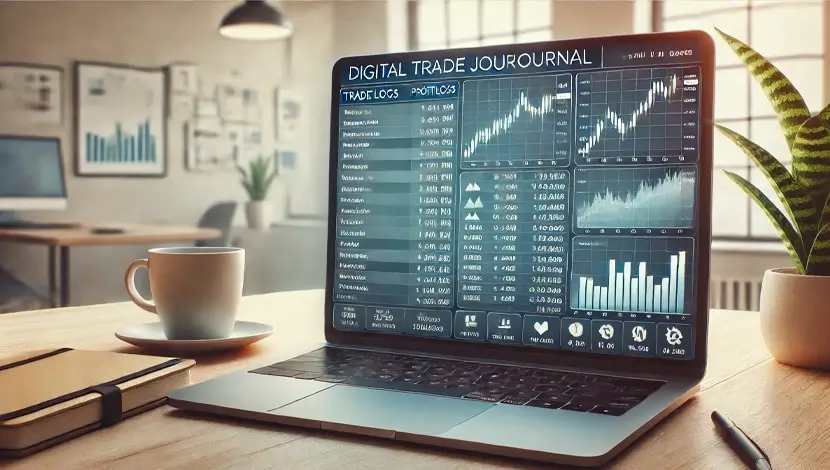
Data is only valuable if it’s easy to interpret. An automated trading journal provides customizable dashboards that present key trading metrics in a visual format. Traders can personalize their dashboards to highlight:
- Performance trends over time
- Risk exposure and position sizing
- Historical trade patterns and recurring mistakes
These interactive dashboards enable traders to make quick, informed decisions based on real-time data without sifting through spreadsheets or handwritten notes.
The Benefits of an Automated Trading Journal
Traditional trade journaling methods, which rely on manual entries and subjective analysis, often fail to provide traders with the real-time insights they need. AI trade journaling, on the other hand, offers an automated and intelligent approach to tracking and analyzing trades. By leveraging an automated trading journal, traders can enhance their efficiency, make more informed decisions, and gain deeper insights into their trading behaviors.

1. Increased Efficiency: Save Time While Improving Accuracy
Manually logging trades is time-consuming and prone to human error. An automated trading journal eliminates this burden by seamlessly tracking every trade in real time. Traders no longer need to input trade details manually, reducing the risk of missing or misrecording entries. This automation not only saves valuable time but also improves the accuracy of trade records, ensuring a more reliable dataset for analysis.
2. Data-Driven Decision-Making: AI Identifies Profitable Patterns
One of the most significant advantages of AI trade journaling is its ability to analyze vast amounts of trading data and uncover profitable patterns. AI-driven analytics detect trends, evaluate risk levels, and highlight areas where traders can optimize their strategies. Instead of relying on intuition, traders can make data-backed decisions that improve their long-term profitability.
AI can also provide performance reports, comparing different trading strategies and identifying which approaches yield the highest returns. By utilizing these insights, traders can refine their methods and maximize their gains.
3. Behavioral Insights: Detecting Overtrading, Impulsive Decisions, and Risk Appetite
Successful trading isn’t just about strategy—it’s also about psychology. Many traders fall into patterns of overtrading, making impulsive decisions, or taking excessive risks without realizing it. An automated trading journal powered by AI helps traders recognize these behavioral tendencies by tracking their actions over time.
With AI-driven behavioral analysis, traders receive alerts when they show signs of emotional trading. This allows them to adjust their approach before costly mistakes occur. This insight fosters better discipline, helping traders stick to their strategies and avoid knee-jerk reactions to market movements.
4. Integration with Trading Platforms: Seamless Syncing with Brokers and APIs
A key advantage of an automated trading journal is its ability to integrate with various trading platforms, brokerage accounts, and APIs. Unlike traditional journaling, where traders must manually input data, AI-powered systems pull trade data directly from connected accounts.
This integration ensures that trade records are always up to date and eliminates the risk of incomplete or incorrect data entries. Additionally, traders can access their journal from multiple devices, allowing them to review and analyze their trades anytime, anywhere.
Take control of your trades with Master the Market by AryaMerxs! Gain expert insights and strategies to trade with confidence
Choosing the Right AI-Powered Trading Journal
With the growing adoption of AI trade journaling, traders have numerous options when selecting an automated trading journal that fits their needs. However, not all AI-powered journals are created equal. The right choice depends on factors such as software type, customization options, security, and analytical capabilities. Here’s what traders should consider when choosing the best AI-powered trading journal for their workflow.
1. Open-Source vs. Proprietary Software
One of the first decisions traders must make is whether to use an open-source or proprietary AI-powered trading journal.
- Open-source AI trade journaling software offers flexibility, allowing traders to modify and customize the platform to their specific needs. It is often free or low-cost but requires some technical knowledge to implement and maintain.
- Proprietary AI-powered journals, on the other hand, come as fully developed solutions with dedicated support, security updates, and built-in analytics. While they typically involve a subscription or licensing fee, they offer a user-friendly experience with minimal setup.
For traders who prefer control and customization, an open-source solution might be the best fit. However, those looking for ease of use and reliability may benefit from proprietary software.
2. Customizable vs. Plug-and-Play Solutions
Another crucial factor is whether the automated trading journal is customizable or a plug-and-play solution.
- Customizable AI-powered trading journals allow traders to tweak metrics, add custom fields, and integrate external data sources. This is ideal for advanced traders who want in-depth personalization.
- Plug-and-play solutions, in contrast, provide pre-built templates and analytics dashboards. These are designed for traders who prefer simplicity and an out-of-the-box experience.
Choosing between these two depends on a trader’s level of expertise and preference for flexibility. Those who require tailored analytics may opt for customizable solutions, while traders who prioritize speed and efficiency might prefer a ready-to-use journal.
3. Key Factors to Consider: Security, Ease of Use, and Analytics Depth
Regardless of the type of AI trade journaling software chosen, there are three critical factors traders should always evaluate:
Security
Since automated trading journals store sensitive financial data, security is a top priority. Traders should ensure the platform uses end-to-end encryption, multi-factor authentication (MFA), and secure cloud storage. Proprietary software often includes built-in security features, while open-source solutions may require additional configuration.
Ease of Use
An AI-powered trading journal should simplify the process, not complicate it. A well-designed interface, intuitive navigation, and seamless integration with brokerage accounts can make a significant difference in usability. Traders should look for platforms that offer real-time syncing and easy access to trade history without requiring excessive manual input.
Analytics Depth
The true power of an AI-powered journal lies in its analytics. Traders should assess:
- Does it provide deep insights into performance metrics, risk exposure, and trading psychology?
- Does it offer AI-driven recommendations for strategy optimization?
- Can it identify trading patterns and behavioral biases?
A robust AI trade journaling system should go beyond basic tracking and provide actionable insights that help traders improve their decision-making.
The Future of Trade Journaling
The future of AI trade journaling is rapidly evolving, transforming from a simple record-keeping tool into an intelligent, predictive, and fully automated system. As artificial intelligence continues to advance, automated trading journals are becoming more than just passive tracking tools—they are now active participants in the decision-making process. The next generation of trade journaling will not only document past trades but also anticipate future trends, recommend optimal strategies, and even interact with traders through voice commands.
1. AI Evolving Towards Predictive Analysis & Automation
The next phase of AI trade journaling is predictive analytics. Instead of analyzing past data, AI-powered journals will use machine learning algorithms to identify potential market trends and suggest adjustments before a trader realizes the need for them.
An automated trading journal can access historical trading patterns, risk exposure, and market conditions and alert traders to high-probability trade setups, risk-heavy positions, and potential shifts in market behavior. This predictive capability will help traders refine their strategies proactively rather than reactively.
Automation will also continue to improve, eliminating the need for manual inputs altogether. Trade journaling will seamlessly integrate with brokerage accounts, automatically categorizing trades, evaluating performance, and providing risk assessments in real time, allowing traders to focus on decision-making rather than record-keeping.
Boost your trading with ARYAMERXS AI Chatbot!
Get real-time insights, AI-driven strategies, and instant trade analysis
2. The Rise of Smart Trading Assistants Suggesting Optimal Trade Setups
As AI becomes more sophisticated, automated trading journals will evolve into smart trading assistants that do more than just track trades—they will actively suggest optimal trade setups based on real-time market conditions.
These AI-driven assistants will analyze technical indicators, sentiment data, and historical trends to identify high-probability trade opportunities. Instead of manually sifting through charts and data, traders’ AI-powered trade journals will provide actionable insights and strategy recommendations, helping them execute smarter trades with minimal effort.
Additionally, these assistants will help traders manage emotions and discipline. By detecting impulsive behaviors and risk-taking tendencies, AI-powered systems will notify traders when they are straying from their proven strategies, reinforcing a more structured and disciplined approach.
3. Voice-Command Trade Journaling & NLP-Powered AI Summaries
The future of AI trade journaling will also involve voice-activated capabilities powered by Natural Language Processing (NLP). Instead of manually inputting trade details or searching through analytics, traders will be able to interact with their AI-powered trading journal using voice commands.
For example, a trader could simply say:
“Summarize my last 10 trades and highlight patterns in my win/loss ratio.”
and the automated trading journal will instantly generate a report with key insights.
Voice-activated journaling will increase convenience and accessibility, making trade analysis faster and more intuitive. Traders will be able to dictate notes, receive AI-generated insights, and even ask real-time questions about their trading performance—all hands-free.
Conclusion
In today’s fast-moving financial markets, having a structured and data-driven approach to trade journaling is no longer optional—it’s essential. Automated trading journals have redefined how traders track, analyze, and optimize their strategies, eliminating the inefficiencies of manual record-keeping. By leveraging AI, traders can gain real-time insights, reduce emotional biases, and refine their decision-making process with unparalleled precision. The transition from traditional journaling to AI trade journaling represents a shift toward smarter, faster, and more informed trading.
Traders who embrace AI-powered trade journaling gain a competitive advantage in an industry where speed and accuracy are crucial. With features like predictive analytics, behavioral insights, and seamless brokerage integration, an automated trading journal provides the foundation for continuous improvement and strategic refinement. Instead of spending time manually logging trades, traders can focus on what truly matters—analyzing market opportunities and optimizing their performance.
The future of trade journaling is AI-driven, predictive, and highly personalized. As AI continues to evolve, trading journals will go beyond simple tracking and offer proactive recommendations, automated risk assessments, and voice-activated insights. Those who adapt to these innovations will not only enhance their efficiency but also maximize their profitability. In a world where data is power, AI trade journaling is the key to effortless, smarter trading.


