
Trading journals have long been essential tools for traders who want to analyze their past trades, refine their strategies, and improve their decision-making. Traditionally, traders tracked their performance using manual logs, spreadsheets, or even handwritten notes. However, these methods have significant limitations: Manual entry is time-consuming, prone to errors, and lacks deep analytical power.
In today’s fast-paced financial markets, traders face new challenges: information overload, cognitive biases, and inefficiencies in trade tracking. The sheer volume of data available—ranging from price action and technical indicators to news sentiment and macroeconomic factors—makes it increasingly difficult for traders to extract meaningful insights. Moreover, human biases often cloud judgment, leading to suboptimal trade decisions.
This is where Automated Trading Journals powered by AI come into play. Unlike traditional journaling methods, AI for Trade Tracking offers real-time data analysis, pattern recognition, and automated performance evaluation. These intelligent systems eliminate the need for manual input, provide unbiased feedback, and help traders identify hidden opportunities and risks. By leveraging AI, traders can optimize their strategies, minimize emotional biases, and confidently make data-driven decisions.
In this article, we’ll explore how AI-driven Automated Trading Journals transform trade tracking, enhance trader performance, and pave the way for the next generation of trading tools.
The Flaws of Traditional Trading Journals
For years, traders have tracked their trades using traditional trading journals—spreadsheets, notebooks, or simple logging tools. While these methods serve a purpose, they have significant limitations that make them inefficient for modern trading.

1. Manual Entry Fatigue
Traditional trading journals require traders to log every trade manually. This process is time-consuming and tedious, often leading to human errors, such as incorrect trade details or missing data. As a result, traders either neglect journaling altogether or fail to maintain consistency, making their records unreliable. In contrast, Automated Trading Journals eliminate the need for manual input by seamlessly integrating with trading platforms, ensuring accurate and real-time trade tracking.
2. Lack of Deep Insights
A conventional trading journal is essentially a static record of past trades—it logs information, but it doesn’t analyze it. Without proper analysis, traders are left with raw data that offers no actionable feedback. They must manually extract insights, which is not only inefficient but also prone to misinterpretation. This is where AI for Trade Tracking revolutionizes the process by providing advanced analytics, identifying trading patterns, and offering data-driven recommendations for strategy optimization.
3. Psychological Biases and Misinterpretation
One of the biggest drawbacks of traditional trading journals is their inability to counteract cognitive biases. Traders often overestimate their successes, downplay their losses, or misattribute their performance to luck rather than skill. Since human memory is naturally flawed, traders might unconsciously distort their past trading behavior. AI-powered Automated Trading Journals remove emotional bias by objectively analyzing trading decisions, helping traders gain an accurate and unbiased understanding of their performance.
In summary, traditional trading journals are outdated and inefficient for today’s fast-paced markets. With AI for Trade Tracking, traders no longer need to struggle with manual data entry, limited insights, and biased self-evaluation. Instead, they can leverage AI-driven solutions to make smarter, data-backed trading decisions with precision and efficiency.
The Rise of AI in Trade Tracking
The trading landscape is rapidly evolving, and AI is at the forefront of this transformation. Traditional trading journals relied on manual data entry and retrospective analysis, but AI-powered automated Trading Journals have changed the game. Instead of just recording trades, AI actively analyzes them, detects patterns, and provides real-time feedback.

Enhance your trading experience with ARYAMERXS AI Chatbot – Get real-time market insights and instant trade support.
What Makes AI Different?
Unlike traditional methods that require traders to manually track and interpret their performance, AI for Trade Tracking leverages smart data processing to analyze vast amounts of trading data in real time. It goes beyond simple trade logging and transforms raw data into actionable insights. AI eliminates human biases, identifies inefficiencies, and provides data-driven recommendations to optimize trading strategies.
Machine Learning and Pattern Recognition
One of AI’s greatest strengths is its ability to recognize hidden patterns in trading behavior. Through machine learning algorithms, AI identifies trends that traders often miss—whether it’s a recurring mistake in risk management, an overlooked market trend, or an opportunity for strategy optimization. With AI-powered Automated Trading Journals, traders can uncover these insights without having to manually sift through extensive trade histories.
Automation of Tedious Tasks
One of the biggest pain points for traders is the time-consuming nature of traditional trade tracking. Manually logging trades, calculating performance metrics, and summarizing results can be exhausting and error-prone. AI eliminates these inefficiencies by automating trade tracking, categorizing trades, and generating performance reports instantly. With AI, traders no longer need to worry about missing key details or spending hours on administrative tasks, allowing them to focus on refining their strategies and making better trading decisions.
Key Features of an AI-Driven Automated Trading Journal
As trading becomes increasingly data-driven, Automated Trading Journals powered by AI are redefining how traders track, analyze, and refine their strategies. These smart tools go beyond simple trade logging—they offer real-time insights, automation, and advanced analytics. Here are the key features that make AI for Trade Tracking an essential tool for modern traders:
1. Trade Tracking Automation
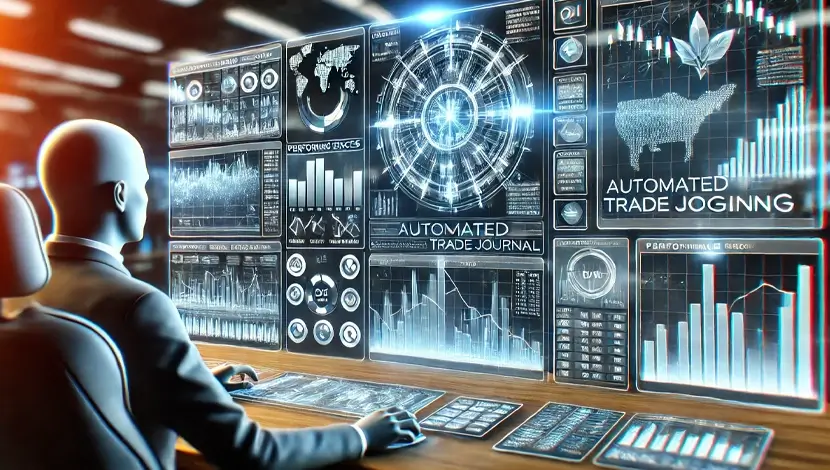
Manual trade logging is a thing of the past. AI-driven Automated Trading Journals automatically record, categorize, and track trades in real time. Instead of spending hours entering trade details, traders can focus on strategy development while AI takes care of the tedious tracking process.
2. Performance Analytics
Simply logging trades isn’t enough—AI for Trade Tracking offers deep analytical capabilities. AI evaluates past trades, identifies strengths and weaknesses, and highlights recurring patterns that traders may overlook. These insights allow traders to refine their approach, optimize strategies, and improve their long-term performance.
3. Risk Assessment and Optimization
One of the biggest challenges in trading is managing risk effectively. AI dynamically calculates risk-to-reward ratios, position sizing, and exposure levels, helping traders make smarter decisions. Automated Trading Journals provide real-time risk assessments, ensuring traders can adjust their strategies before making costly mistakes.
4. Emotional and Behavioral Insights
Emotions can often cloud judgment in trading. AI tracks decision-making patterns and detects behavioral tendencies that may lead to impulsive or biased decisions. By providing objective feedback, AI for Trade Tracking helps traders recognize and eliminate cognitive biases, leading to more rational and disciplined trading.
5. Seamless Integration with Trading Platforms
A major advantage of AI-driven Automated Trading Journals is their ability to seamlessly connect with brokerage accounts, APIs, and trading platforms. This ensures that trade data is captured automatically, eliminating manual errors and ensuring accuracy. Integration with multiple platforms allows traders to access their trade history, analytics, and insights effortlessly.
How AI Enhances Decision-Making for Traders
Making informed, data-driven decisions is crucial for success. Traditional methods of evaluating trade performance are often biased and retrospective, making it difficult for traders to refine their strategies continuously. This is where Automated Trading Journals powered by AI come into play. By leveraging AI for Trade Tracking, traders gain access to real-time insights, objective feedback, and predictive analytics, leading to smarter and more efficient decision-making.
Unlock your trading potential with Master the Market by ARYAMERXS – Gain expert insights and strategies to stay ahead.
1. Personalized Insights Tailored to Each Trader
No two traders are the same—each has a unique style, risk appetite, and trading strategy. AI for Trade Tracking adapts to these individual preferences by analyzing a trader’s past performance and identifying patterns specific to their trading behavior. Instead of providing generic advice, Automated Trading Journals offer customized insights that align with each trader’s strengths and weaknesses, helping them fine-tune their strategies for maximum profitability.
2. Eliminating Hindsight Bias with Objective Feedback
One of the biggest challenges traders face is hindsight bias—the tendency to overestimate how predictable past trades were. This often leads to misjudging decisions and repeating mistakes. AI removes this cognitive bias by offering objective, data-driven feedback. Instead of relying on memory or subjective interpretation, traders can analyze hard data that accurately reflects what worked and what didn’t, allowing for continuous improvement without emotional interference.
3. Real-Time Strategy Refinement
Timing is everything in trading. Making adjustments after losses occur is not as effective as optimizing strategies in real time. AI-driven Automated Trading Journals continuously monitor trades, detect inefficiencies, and offer real-time suggestions to refine strategies before costly mistakes happen. This proactive approach allows traders to adjust their risk exposure, optimize position sizing, and refine entry/exit points on the fly, ultimately leading to better performance.
The Future of AI-Powered Trading Journals
The role of AI for Trade Tracking is evolving rapidly, and the future of Automated Trading Journals is set to go beyond simple trade logging and analytics. AI is becoming a powerful decision-making assistant, helping traders optimize their real-time strategies, predict market movements, and enhance profitability. Here’s a glimpse into how AI-powered trading journals will shape the future of trading:
1. Predictive Analytics: AI Forecasting Trade Success Probabilities
One of the most exciting advancements in AI-driven trading is the integration of predictive analytics. Instead of just analyzing past trades, Automated Trading Journals will leverage AI to forecast the probability of trade success based on historical data, market trends, and real-time conditions. By identifying high-probability trading opportunities, traders can make more informed and data-driven decisions, reducing guesswork and improving risk management.

2. AI-Driven Trading Assistants: Beyond Journaling, Real-Time Strategy Advisors
Future AI for Trade Tracking solutions won’t just log trades—they will act as intelligent trading assistants. AI-powered assistants will analyze live market conditions, suggest real-time strategy adjustments, and alert traders to potential risks and opportunities before they make a move. Instead of relying on static trade logs, traders can access an interactive AI assistant that optimizes their approach based on changing market dynamics.
3. The Impact of NLP and Sentiment Analysis on Market Predictions
Another breakthrough in Automated Trading Journals will be using Natural Language Processing (NLP) and sentiment analysis to assess market sentiment. AI will scan news articles, financial reports, earnings calls, and even social media trends to gauge market mood and identify potential price shifts. By incorporating sentiment-driven insights into trading strategies, traders can anticipate major market moves before they happen, gaining a competitive edge.
Track, analyze, and improve your trades with Journalio – The ultimate trading journal for smarter decisions.
Conclusion
The transition from traditional trading journals to AI-powered solutions is no longer a question of “if” but “when.” As financial markets become more complex and data-driven, traders need tools that go beyond basic trade logging and manual analysis. Automated Trading Journals equipped with AI for Trade Tracking are transforming how traders monitor their performance, manage risks, and optimize strategies.
AI is not replacing traders; instead, it empowers them by eliminating manual inefficiencies, providing objective insights, and enhancing decision-making with real-time analytics. By leveraging Automated Trading Journals, traders gain a deeper understanding of their strengths and weaknesses, reduce emotional biases, and confidently make data-backed decisions.
The future of trading belongs to those who embrace AI for precision and efficiency. Traders who integrate AI for Trade Tracking into their workflow will gain a competitive edge, making smarter, faster, and more profitable decisions in an ever-evolving market landscape.


