In the fast-paced trading world, decisions aren’t always made based on data—they’re often made based on dopamine. One day, you’re buying because you feel left out; the next, you’re selling because panic kicks in. These emotional swings—fear, greed, FOMO—aren’t just harmless impulses but powerful emotional biases that cloud judgment and derail strategies. The tricky part? They often go unnoticed until it’s too late. That’s precisely where AI in trading steps in—not to replace human intuition but to sharpen it. By analyzing behavior, spotting subtle patterns, and flagging emotional red flags in real time, AI becomes more than a tool—it becomes your trading co-pilot. Together, you and AI can trade brighter, steadier, and more emotionally aware.
What Are Emotional Biases in Trading?
Let’s get one thing straight—not every bad trade is a bad strategy. Sometimes, it’s a good strategy ruined by a bad moment of emotion.
To understand how that happens, we must separate two often-confused terms: cognitive and emotional biases.
Cognitive biases are like mental shortcuts—flawed patterns in how we process information. They result from gaps in logic or limited knowledge.
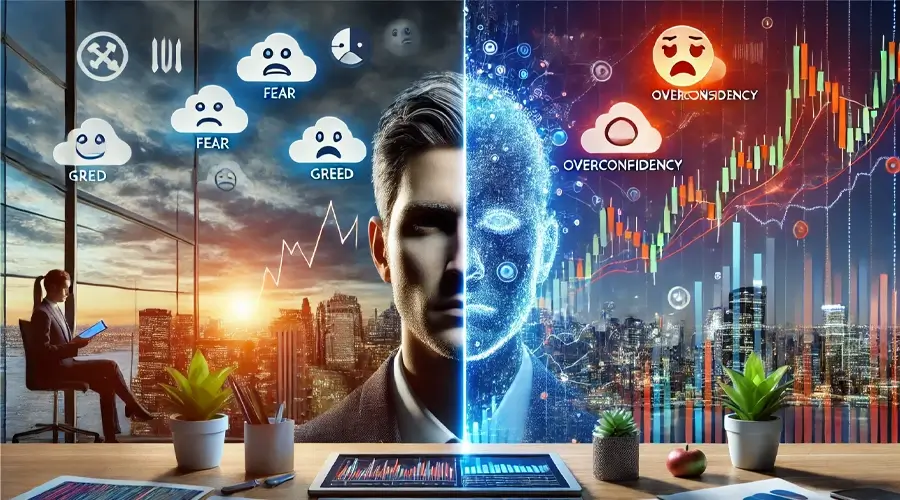
But emotional biases? They’re deeper. They come from feelings—raw, instinctive, and sometimes irrational. And in trading, they hit hard.
Ever felt too confident after a winning streak? That’s overconfidence bias.
You held on to a losing trade because you knew it would bounce back? Welcome to loss aversion.
Bought a stock just because everyone else was buying it? It’s a classic case of herd mentality.
These biases aren’t rookie mistakes—they’re human tendencies. Even experienced traders fall for them. The danger lies in how sneaky they are. They don’t shout. They whisper. They convince you that what you feel is what you know.
And that’s why recognizing them is absolutely critical. Because if you can’t see your emotional patterns, you can’t manage them. And if you can’t manage them, even the most brilliant strategy can spiral into a mess of regret and second-guessing.
This is where the silent observer—AI in trading—starts proving its worth. But we’ll get to that in a moment.
The Role of AI in Identifying These Biases
Most traders track numbers. AI tracks you.
While you focus on price action, charts, and indicators, AI-powered trading platforms quietly observe something far more subtle—your behavior. And that’s where the magic begins. By analyzing behavioral data over time, AI doesn’t just see what you trade—it understands how and why you trade.
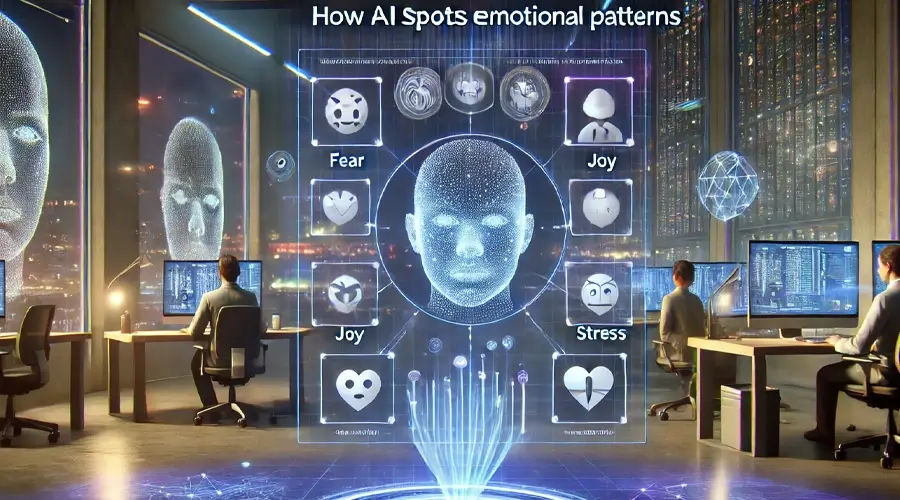
How AI Spots Emotional Patterns:
Using a mix of machine learning algorithms and behavioral analytics, AI systems detect recurring emotional triggers that humans typically overlook. Here’s how:
- Pattern Recognition in Trade History
AI maps your past trades to find patterns like:- Exiting too early after a small win (fear)
- Doubling down after a loss (revenge trading)
- Following the crowd in volatile markets (herd mentality)
- Change Detection in Strategy Execution
Let’s say your usual risk-reward ratio is 1:3. Suddenly, you switch to 1:1 in a panic.
AI catches this deviation and flags it as a possible emotion-driven shift.
It doesn’t assume—it learns from your past and identifies anomalies in your behavior. - Live Monitoring of Journals and Notes
Through Natural Language Processing (NLP), AI can:- Analyze the tone and language in your trading journals.
- Detect emotional signals like stress, frustration, or overconfidence
- Match emotional tone with trade outcomes to improve future decision-making
Example Table: AI Behavioral Monitoring Framework
| Data Source | What AI Detects | Example Emotional Bias |
| Trade Execution History | Timing, size, and frequency shifts | Overconfidence, loss aversion |
| Trading Journal Texts | Sentiment & tone analysis | Fear, regret, frustration |
| Chat with Trading Bots | Emotional keywords & urgency | Impulsiveness, FOMO |
| Reaction to Market News | Volatility in decision-making | Herd behavior, anxiety |
Key Tools Used:
- Machine Learning: Learns from your historical trading data and flags anomalies.
- NLP & Sentiment Analysis: Reads between the lines in your journal and chats.
- Predictive Behavior Models: Anticipates the likelihood of bias-driven trades before they happen.
AI isn’t judging your emotions—it’s witnessing them, measuring them, and helping you regain control. Because trading isn’t just about what’s happening in the market—it’s about what’s happening in your mind.
Emotions Are Data, Too: How AI Reads Between the Lines
Emotions are often seen as enemies in trading. But what if we treated them like data points instead?
This is precisely what modern AI in trading systems do—they don’t ignore your emotions. They analyze them. They decode the hidden signals buried in your words, tone, and even hesitation. Because every time you write something like “I knew it would drop,” you’re leaving behind emotional breadcrumbs.

Natural Language Processing (NLP) in Trading Journals
Most traders jot down notes after each session:
“Felt nervous—market was too volatile.”
“Jumped in too soon, missed confirmation.”
To a human, these are casual comments. To an AI using NLP, they’re gold mines of emotional data.
AI breaks down these journal entries to:
- Identify keywords tied to emotional states (e.g., “anxious”, “regret”, “confident”)
- Track sentiment trends over time (Are you becoming more fearful? More impulsive?)
- Connect emotional language to trade outcomes—helping spot what feelings lead to success or failure
Fun Fact: Some advanced trading platforms now offer AI-powered journaling tools that give you emotional insights on your trading mindset, not just your P&L.
Sentiment Analysis in Trader Conversations
Whether it’s a Telegram group, Discord chat, or Slack channel, your conversations with other traders say a lot about your state of mind.
Using sentiment analysis, AI can:
- Detect emotional spikes in language (e.g., “I’m panicking”, “Market is killing me”)
- Flag groupthink or herd behavior forming in chatrooms
- Warn you when the emotional temperature of your trading environment is rising too high
It’s like having a mood radar constantly scanning your internal and external trading world.
Predictive Analytics: Stopping the Spiral Before It Starts
This is where things get really smart.
By combining:
- Your emotional patterns (from NLP and sentiment analysis)
- Your past decision-making behavior
- Current market conditions
AI can generate predictive alerts when it senses you’re about to make an emotion-fueled decision. For example:
- “Your risk profile has shifted. Consider reviewing your position.”
- “This trade resembles previous impulsive entries—pause for confirmation.”
- “You’ve shown signs of FOMO after market spikes—wait for a pullback.”
It’s not about telling you what to do.
It’s about helping you see what your emotions are trying to do to you.
Emotion isn’t noise. It’s data—valuable, powerful, and deeply human.
Thanks to AI, we now have the ability to translate that data into insight for the first time in trading history.
Master the Market with ARYAMERX — start your journey to pro trading.
Learn, analyze, and navigate the market with confidence.
From Detection to Correction: How AI Helps Traders React Better
Knowing you’re acting emotionally is step one. Knowing how to stop it? That’s where the real edge is.
After identifying emotional triggers and behavioral patterns, AI in trading takes it one step further: It becomes a real-time coach, a co-pilot who doesn’t just observe but guides. It helps you break the cycle before the damage is done.
Real-Time Suggestions for Neutral Decision-Making
When you’re on the verge of panic-buying or rage-selling, the last thing you need is a lecture. You need a nudge. That’s why innovative AI systems offer instant, non-intrusive suggestions to stabilize your thinking:
- “You’ve increased position size unusually—review your risk parameters.”
- “Your last three trades show a trend of chasing breakouts—pause and reassess.”
- “You tend to overtrade during high volatility—consider stepping away.”
These aren’t rules—they’re reminders, designed to interrupt emotional autopilot and bring you back to conscious strategy.
Emotion-Aware Trading Bots: Automation with a Soul
Some traders hand over part of their execution to emotion-aware trading bots—automated systems that aren’t just technically smart but emotionally intelligent. Here’s what makes them unique:
- Adaptive behavior: They adjust execution strategies based on your emotional patterns. If you overtrade after losses, the bot can automatically reduce your exposure.
- Bias-prevention filters: Bots can pause execution if they detect you’re making erratic decisions outside your usual plan.
- Sentiment syncing: Some advanced bots even sync with your journal or mood tracker, factoring in your current mindset before acting.
It’s not full automation—it’s emotional delegation.
Instant Feedback Systems for Emotional Growth
Like elite athletes watch playback footage, elite traders review their emotional performance. AI makes this review process innovative, efficient, and brutally honest.
Here’s how AI-based feedback loops work:
- Daily/weekly emotion reports: “This week, your trades after 3 p.m. were more impulsive and less profitable.”
- Behavioral heatmaps: Visual charts of when you were most emotionally reactive—by time of day, asset, or news type.
- Customized learning prompts: Suggestions like “Revisit your risk plan” or “Practice mindfulness before market open.”
Over time, these systems help you avoid emotional mistakes and build emotional intelligence.
Real-World Use Cases: Traders Who Outsmarted Their Emotions
We’ve talked about theory. Now, let’s talk about transformation.
When traders allow AI-based emotional monitoring into their workflow, the results are often dramatic—not just in performance metrics but also in mental clarity, confidence, and long-term consistency. Let’s look at a few real-world snapshots that show how powerful this synergy can be.
Case #1: The Overtrader Who Finally Found the Brake
Before AI:
Ali, a 32-year-old crypto day trader, struggled with overtrading during high-volatility periods. His worst trades often came after a significant loss—chasing to “win it back.” He didn’t realize how predictable his emotional spirals had become.
After AI:
By integrating a platform with emotional analytics and real-time feedback, Ali started receiving gentle nudges when his behavior deviated from his usual pattern. The system detected when his trade frequency increased irrationally and suggested taking a break.
Result? 25% fewer trades per week—and a 40% increase in profitability.
“It was like having someone whisper, ‘You’re not thinking clearly—breathe.’ That alone saved me thousands.”
Case #2: The Confident Swing Trader Who Didn’t Know She Was Biased
Before AI:
Sara, a 28-year-old swing trader, had a solid technical strategy—but couldn’t explain why she kept ignoring her stop-losses. Losses would pile up before she emotionally accepted the reality.
After AI:
Using an NLP-based journaling assistant, the system identified recurring language in her notes, such as “I still believe this will bounce” and “Can’t be wrong again.” AI flagged these phrases as overconfidence signals tied to previous losses.
Once Sara became aware of the pattern, she adjusted her approach—reducing emotional hold time on losing positions.
“I didn’t even realize my ego was trading for me. AI helped me recognize it—without judgment.”
Case #3: The Community-Driven Trader Caught in the Crowd
Before AI:
Reza, a 35-year-old trader active in multiple Telegram and Discord groups, often entered positions based on group hype. He’d often buy at the peak of community sentiment.
After AI:
With sentiment analysis tools monitoring his chat interactions, the system began warning him when “herd language” peaked—words like “everyone’s jumping in”, “don’t miss this”, or “this one’s going to the moon.” He started treating those moments as caution signs instead of entry signals.
Result? Less reactive trading. More discipline. Fewer “why did I do that?” moments.
Before & After: Emotion Tracking Changes Everything
| Trader | Emotional Bias Identified | AI Tool Used | Result |
| Ali (Crypto) | Revenge Trading | Real-time behavioral alerts | +40% ROI, fewer overtrades |
| Sara (Swing) | Overconfidence/denial | NLP-based journaling feedback | Better stop-loss discipline |
| Reza (Community) | Herd mentality / FOMO | Sentiment analysis in chat apps | Avoided hype-trades |
These traders weren’t beginners. They were skilled, experienced, and informed.
But even the best fall victim to emotions—unless they have something watching their blind spots.
AI in trading doesn’t promise perfection. It promises awareness.
And sometimes, that’s all it takes to outsmart your brain.
The Human-AI Synergy: Not Replacing, But Enhancing
Let’s clarify something: AI isn’t here to take your seat. It’s here to sit beside you.
Despite all its brilliance, AI can’t feel the market pulse like you do. It can’t anticipate a central bank’s tone shift by reading between the lines of a speech. It can’t sense context the way a human trader can. But do you know what it can do?
It can remind you when you’re no longer thinking like that version of yourself.
The real power comes from synergy—when your intuition competes with AI’s precision. It’s not about choosing between man or machine. It’s about what happens when they collaborate.
Why the Combo Works Better:
- Human Insight + Machine Consistency
You spot the setup. AI keeps you grounded when emotions try to hijack it. - Strategic Thinking + Pattern Detection
You define the strategy. AI monitors if you’re sticking to it—especially when pressure builds. - Experience + Speed
You’ve seen this scenario before. AI processes thousands like it in milliseconds to give perspective.
Think of it like flying a plane.
You’re the pilot. You feel the wind; trust your instincts. But would you ever fly without instruments? Without an autopilot to back you up when fatigue kicks in?
That’s what AI in trading offers—not a replacement for your skill but a safety net for your moments of doubt.
In a market where milliseconds matter and emotions move faster than price, this human-AI partnership gives you something rare: clarity.
Not every trade will be perfect. But every trade can be conscious.
Unlock smarter trading with Journalio — your AI-powered trade journal.
Track, analyze, and improve every move with precision.
Conclusion
Trading has never just been about charts and candlesticks. It’s a psychological battlefield where your biggest opponent is often you. Fear whispers, greed yells, and doubt creeps in—usually before you click “buy” or “sell.”
But now, you’re no longer alone in that fight.
With the rise of AI in trading, we’ve entered a new era—one where your decisions can be informed, not impulsive. One where your emotional patterns aren’t hidden liabilities but are visible, trackable, and manageable.
You still make the final call. But now, you have a second brain—faster, calmer, always watching your back.
So no, AI isn’t here to make you less human.
It’s here to help you become a better one—a more aware, disciplined, consistent trader.
Take your trading to the next level with ARYAMERX.
Explore smarter tools, deeper insights, and a winning edge.


