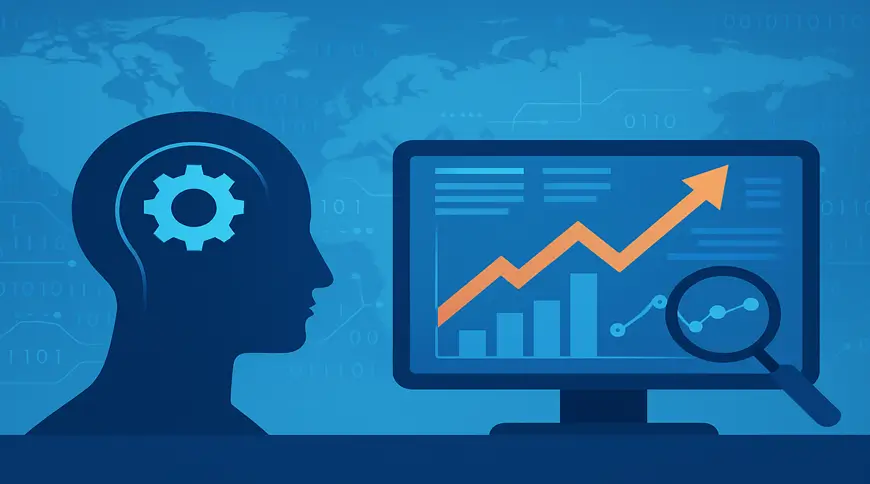
Markets no longer wait for you to catch up. Trends shift, consumers pivot, and entire industries evolve—sometimes overnight. In this dynamic arena, relying on gut feeling is less of a strategy and more of a gamble. That’s why more and more businesses and investors are leaning into something far sharper than instinct: AI for Market Predictions.
The ability to foresee patterns, anticipate shifts, and make data-driven decisions has become a Market prediction is no longer a luxury reserved for massive hedge funds or tech giants—it’s a survival tool in the digital age.
Enter the era of Artificial Intelligence and Big Data, not just as analytical tools but as intelligent partners. With their combined force, we’re seeing a transformation in how markets are understood and trends are forecasted. AI-driven market analysis now enables organizations to go beyond looking at what has happened and instead, gain clarity on what is likely to happen next.
In this new landscape, predictive analytics is your crystal ball, and AI is the one powering it.
From Hindsight to Foresight: How AI Sees Ahead
Markets don’t repeat themselves—but they do rhyme. That’s where AI for Market Predictions thrives: identifying patterns we can’t see, and forecasting trends we didn’t expect.
AI’s Evolution: From Reactive Analytics to Predictive Intelligence
For example, AI doesn’t just tell you that sales dipped last quarter—it tells you why, and more importantly, what’s likely to happen next. It recognizes correlations that humans might miss: a surge in social chatter about eco-friendly packaging? That might just signal a shift in consumer sentiment your team hasn’t picked up on yet.
At the heart of this foresight is predictive modeling—a technique where AI systems are trained on massive historical datasets to predict future outcomes with remarkable accuracy. Whether it’s spotting early signs of a market downturn or identifying a breakout product category, AI-driven foresight can give decision-makers a competitive edge that feels almost unfair, empowering them with a sense of control and confidence.
But here’s the truth: it’s not magic. It’s math—refined, trained, and scaled.
The Role of Big Data in Training AI Models
Big Data is to AI what fuel is to fire. Without vast, diverse, and high-quality datasets, even the most advanced algorithms remain blind. To build accurate and reliable AI for market predictions, data isn’t just important—it’s everything.
AI learns by example. The more examples it sees—across industries, geographies, seasons, and customer segments—the better it becomes at forecasting. This is where Big Data steps in, feeding the system with historical trends, transaction logs, social media chatter, web behavior, economic indicators, and other relevant data.
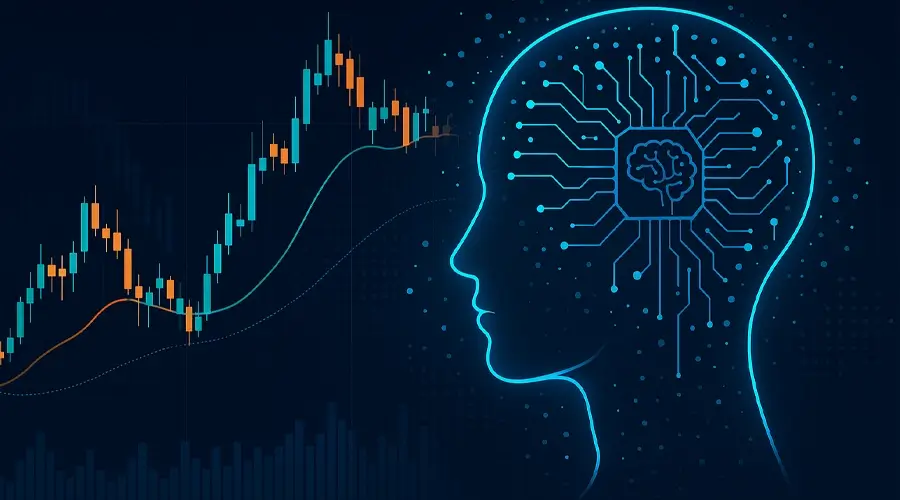
The Crucial Role of Data Preprocessing in AI. Only then can it serve as a solid foundation for predictive models.
Another key element is variety. A robust AI model doesn’t just rely on financial charts or Google Trends; it integrates multiple sources to build a nuanced, context-rich view of the market. This blend of structured and unstructured data is what gives AI the edge over traditional forecasting methods.
The result? AI systems that not only recognize what’s happening now but also detect subtle shifts that hint at what’s coming next, providing a sense of security and reassurance to decision-makers.
With Master the Market by ARYAMERX, turn data into strategy and insights into smarter trades.
AI for Market Predictions: Real-World Forecasting in Action
Market prediction isn’t just about reacting fast—it’s about seeing the wave before it forms. At the core of modern forecasting lies the fusion of AI, Big Data, and predictive analysis. Together, they enable organizations to move from instinct-based decision-making to strategic foresight.
Spotting Emerging Market Trends Before They Go Mainstream
By analyzing vast amounts of structured and unstructured data—from search behavior and purchase history to online sentiment—AI for Market Predictions can detect the early signs of a trend. Whether it’s a shift in consumer preference or a rise in demand across a region, AI reads signals long before humans sense them.
Quantifying Sentiment and Forecasting Demand Shifts
In market prediction, numbers often come late—emotions surface first. This is where AI-powered sentiment analysis becomes a game-changer. These systems don’t just read words in headlines or tweets; they analyze tone, urgency, polarity, and even emotional intensity across massive datasets—from customer reviews and news articles to social media threads.
For example, a sudden rise in mentions of a product might signal more than popularity—it could indicate growing demand, frustration with alternatives, or even a developing trend. By measuring sentiment over time, AI can detect shifts in public mood that typically precede actual buying behavior or market moves.
Even slight changes in tone—like moving from “I’m curious about…” to “I need this now”—can trigger alerts in the system, helping businesses adjust forecasts, pricing strategies, or inventory before the market reacts.

This layer of emotional intelligence gives AI for Market Predictions a sharper edge. It’s not just about what people say—it’s how they feel when they say it.
Dynamic Pattern Recognition Over Time
Traditional forecasting relies on fixed models. AI, on the other hand, evolves. It learns from feedback, adapts to anomalies, and continuously refines its predictions. It detects seasonal fluctuations, competitor activity, and pricing sensitivity in real-time, providing businesses with a dynamic edge.
Forecasting Global and Local Market Movements
How might a supply chain disruption in Asia affect retail demand in Europe? AI integrates data across geography, logistics, and economic indicators to map out ripple effects. This holistic predictive view is nearly impossible with conventional analysis.
Let ARYAMERX’s AI chatbot guide your trades with real-time insights and 24/7 support.
Challenges: When Data Misleads
While AI for Market Predictions holds immense promise, it’s not immune to pitfalls. The very data that fuels AI’s forecasting power can also lead it astray if not handled with precision and context. Insufficient Data In, Bad Predictions Out
AI is only as smart as the data it’s trained on. If the dataset is biased, incomplete, outdated, or irrelevant, the resulting predictions will be flawed. For example, if bots or manipulated campaigns dominate social media sentiment, AI models may forecast fake trends as real ones.
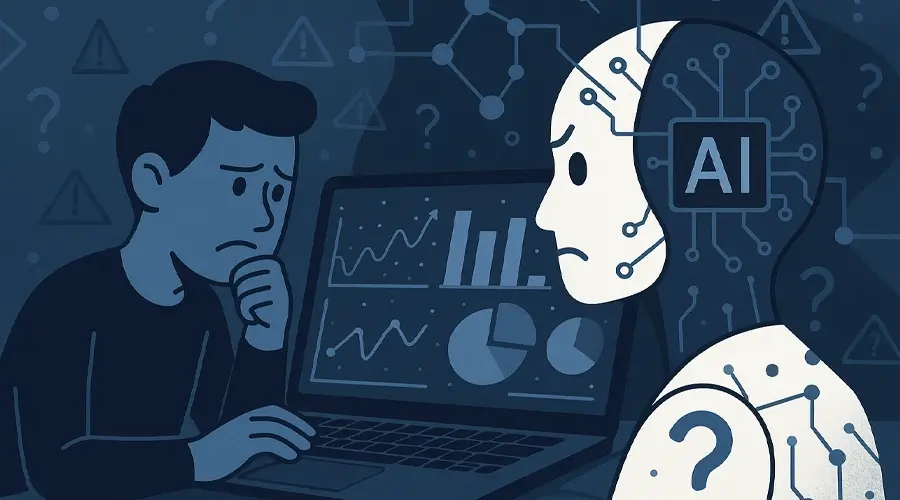
Overfitting and False Confidence
Sometimes, AI models become so obsessed with historical data that they memorize every detail—even the noise, the outliers, and the accidental patterns. While this might look impressive on the surface, it leads to a serious flaw: overfitting.
An overfitted model doesn’t understand how the market works—it just memorizes how it used to work. When the market shifts or behaves unpredictably (which it always does), the model struggles. It fails to adapt because it was trained too rigidly on past conditions.
The real danger arises when these models appear highly accurate, boasting success rates of 98% or higher during testing. But that performance only applies to historical data. In the real world, these models often fall short. The result? Decision-makers feel falsely confident and make risky moves based on predictions that don’t hold up.
This is especially hazardous in fast-moving markets, where past performance often fails to predict future conditions.
To avoid this trap, innovative use of AI requires:
- diverse, representative datasets
- regular validation with unseen or real-time data
- simplicity over unnecessary complexity
- and constant tuning to ensure flexibility and resilience
A brilliant model doesn’t just learn from the past—it’s built to respond to the future.
Ignoring Human Context: When AI Misunderstands the “Why”
One of the most overlooked yet critical limitations of AI for Market Predictions is its inability to understand why something is truly happening. AI excels at identifying patterns, but it doesn’t inherently grasp meaning, intent, or cultural context—things that human intelligence handles instinctively.
Let’s say there’s a sudden spike in online searches for “electric heaters” in a specific region. An AI system may interpret this as a signal of growing market demand and forecast a sales boom. But a human analyst might dig deeper and discover the real reason: a sudden cold snap or a blackout in that region. In such cases, the spike is temporary and not indicative of a long-term trend. Without that human context, AI could make a flawed prediction and misguide business decisions.
Similarly, a surge in social media posts about a new product may be interpreted as an indication of rising popularity. But is it genuine excitement—or backlash? AI may not always differentiate between positive and negative sentiment unless it’s been explicitly trained and refined for that purpose.
This is where human oversight becomes essential. AI can process billions of data points, but only humans can inject meaning, nuance, and ethical reasoning into the analysis. The best outcomes emerge from a hybrid approach—utilizing AI for speed and scale, and human insight for clarity and judgment.
Lag in Real-Time Reaction
Despite its speed, AI systems can suffer from latency when working with massive data pipelines or integrating fragmented data sources. In fast-changing markets, even a few minutes of delay can make predictions outdated.
Privacy and Ethical Considerations
Leveraging behavioral and consumer data can supercharge the accuracy of AI for Market Predictions—but it comes with responsibility. When user data is collected without explicit consent or used in ways that feel manipulative, it crosses an ethical line.
Even a highly accurate prediction isn’t worth the cost of losing public trust. Misuse of data can result in damaged brand reputation, legal penalties under laws like GDPR or CCPA, and long-term audience backlash.
To stay competitive and ethical, businesses must prioritize transparency, data protection, and consent, because predictive power means little without user trust.
Start using Journalio by ARYAMERX to log trades, spot patterns, and improve your strategy with AI-powered insights.
Conclusion: Don’t Guess. Predict Smarter.
The markets of tomorrow won’t reward the fastest or the loudest—they’ll reward the most informed. In a world where data is endless and attention is limited, AI for Market Predictions offers a powerful compass.
By combining the depth of Big Data with the clarity of predictive analytics, AI enables us to transition from reactive decision-making to strategic foresight. But while the tech is powerful, it’s not plug-and-play. Success lies in the blend: high-quality data, human interpretation, and a mindset that’s ready to learn, adapt, and refine.
So, whether you’re a startup navigating uncertain waters or an enterprise chasing the next big trend, don’t guess where the market is heading. Let AI help you predict it.


