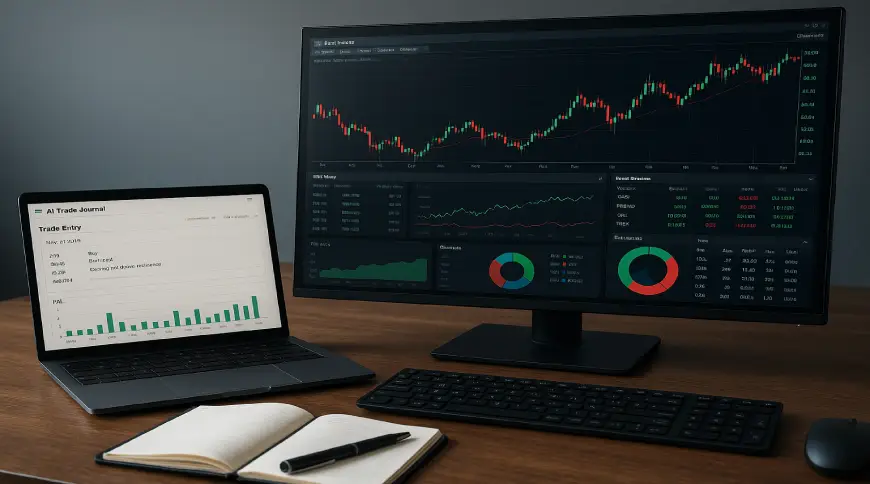
In the fast-paced world of modern trading, information is power — but scattered information? That’s just noise.
If you’ve ever found yourself flipping between your trading dashboard, your handwritten journal (or a Notion tab lost in a sea of Chrome), and five other tools just to figure out why you made that last impulsive trade — you’re not alone. Smart traders are tired of jumping between tools. Not because they don’t want insights, but because those insights are fragmented. And fragmented insights don’t lead to consistent execution.
That’s where the next evolution of trading intelligence comes in: the rise of AI Trade Journals and Advanced Trading Dashboards. These aren’t just buzzwords — they’re systems designed to learn from your behavior, spot your patterns, and support your decision-making in real-time. AI-powered journaling goes far beyond notes. And dashboards? They’ve become sophisticated hubs for visualizing performance, strategy, risk, and even emotion-tagged trade data.
But here’s the real unlock: Integrating AI Trade Journals with Trading Dashboards isn’t just a nice-to-have — it’s what turns your trading from reactive to strategic.
In this article, we’ll show you exactly how this integration works, what benefits it unlocks, and how it transforms your workflow from notebook mode to a fully operational command center. Whether you’re trading full-time or refining your edge on the side, this connection is the next logical step in trading like a pro — not just thinking like one.
What Makes AI Trade Journals Smart?
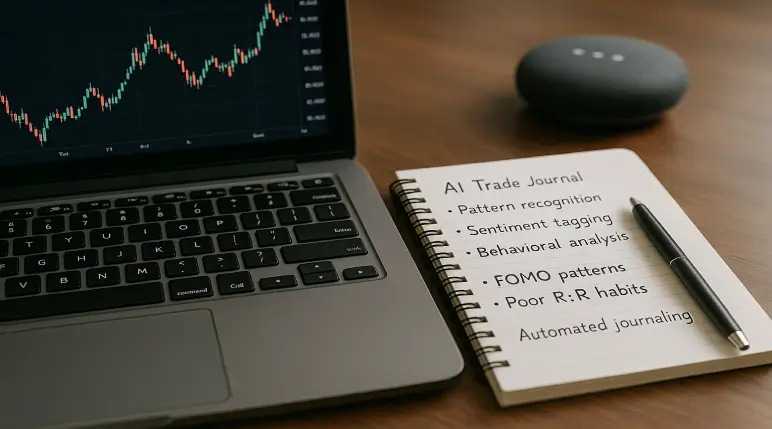
Let’s get one thing straight: AI Trade Journals are not your typical note-taking apps with fancy skins. They’re behavioral mirrors powered by algorithms — tools that not only store your trades but understand them.
What sets them apart? Three words: pattern recognition, sentiment tagging, and behavioral analysis.
Instead of writing “bad entry” in frustration after a losing trade, an AI Trade Journal might detect that you consistently enter too early after a win streak — a typical case of overconfidence or FOMO. It doesn’t just record what you did, it tells you why you probably did it.
🔍 Real-World Intelligence in Action:
- After three green trades, your journal flags that your next two losses had premature entries.
- You write “felt rushed” in your post-trade note — the system tags this with high emotional bias and links it to similar past entries.
- Over time, it tells you: “Your average R: R drops below 1:1 when you increase position size after a win.”
That’s not just smart. That’s surgical self-awareness.
This is the power of automated journaling. It removes the guesswork from introspection and frees you from having to be both trader and therapist. You’re no longer reviewing your trades at the end of the week, trying to remember how you felt. The AI is watching, tracking, and learning in real-time.
🎯 Key Benefits:
- Identifies emotional and strategic blind spots you’d likely miss
- Gives real-time feedback — not just end-of-day analysis
- Builds a library of personalized trading behaviors
- Helps you optimize decision-making before bad habits solidify
In short, AI Trade Journals don’t just log your journey — they coach you through it. And when this intelligence is connected directly to your trading dashboard, the potential to act on those insights instantly multiplies.
The Evolution of Trading Dashboards
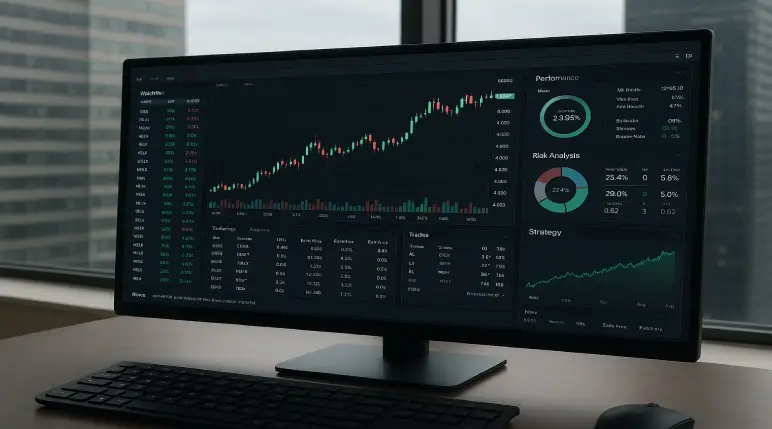
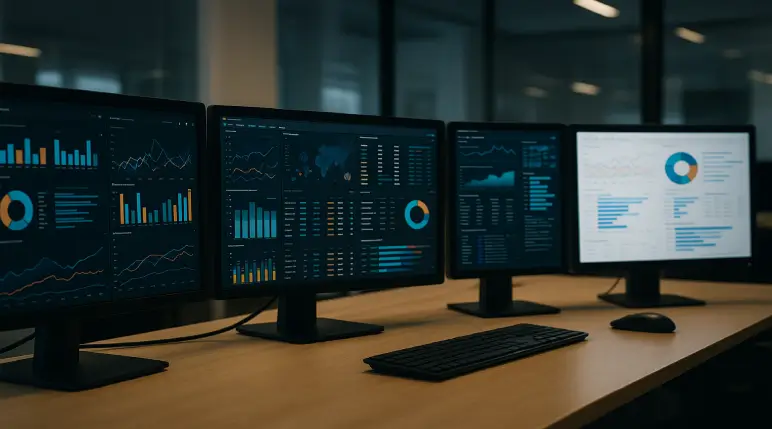
It wasn’t long ago that a trading dashboard meant a basic watchlist and perhaps a few price alerts. Fast forward to today, and we’re looking at something entirely different — intelligent, dynamic Advanced Trading Dashboards that give you a real-time pulse of not just the market, but your own performance.
Modern dashboards now offer real-time analytics, detailed risk metrics, and interactive strategy breakdowns that go far beyond price and volume. You can monitor your portfolio’s drawdown in real time, analyze your win-rate across multiple strategies, and even track how your trades behave under specific market conditions — all from a single screen.
But the real revolution? Connectivity.
Today’s Advanced Trading Dashboards plug into just about everything:
- APIs from brokers stream live trade data
- News sentiment feeds help interpret market psychology
- Economic calendars and Twitter sentiment trackers inject external context
It’s a whole ecosystem —robust, fast, data-rich.
And yet… something’s missing.
Despite all this power, most dashboards are cold and impersonal. They track trades, not traders. They crunch numbers, not mindsets. They don’t know that you tend to overtrade on Mondays or get nervous during FOMC weeks. That’s because, by default, they don’t have access to your why. They don’t have the context your journal holds.
Until now.
By syncing your journal with your dashboard, you allow your setup to evolve from reactive to proactive. You’re no longer just seeing what happened — you’re understanding why it happened, in the moment. And that’s a game-changer.
When Advanced Trading Dashboards integrate with AI-driven journals, they cease to be just analysis tools. They become behavior-aware feedback systems — and that’s when absolute trading mastery begins.
Why Integration Matters: Bridging Insight and Execution
Most traders know why they lose. They’ve seen the pattern a dozen times: overtrading after a win streak, chasing breakouts without confirmation, cutting winners short out of fear. But here’s the kicker — they keep doing it.
This is the disconnect that haunts even the most self-aware traders:
💡 Insight without integration is just theory.
You might journal your mistakes religiously, analyze your metrics every week, and even tweak your strategy accordingly. But when those insights live in silos — one in your notebook, the other on a screen of charts — they rarely translate into better execution.
That’s precisely why Integrating AI Trade Journals with Trading Dashboards is a game-changer. It turns self-knowledge into real-time feedback — right where decisions happen.
💻 How Integration Works (When Done Right):
- Your AI Trade Journal detects that your win rate drops sharply after three consecutive green trades.
- It pushes this behavioral data into your dashboard.
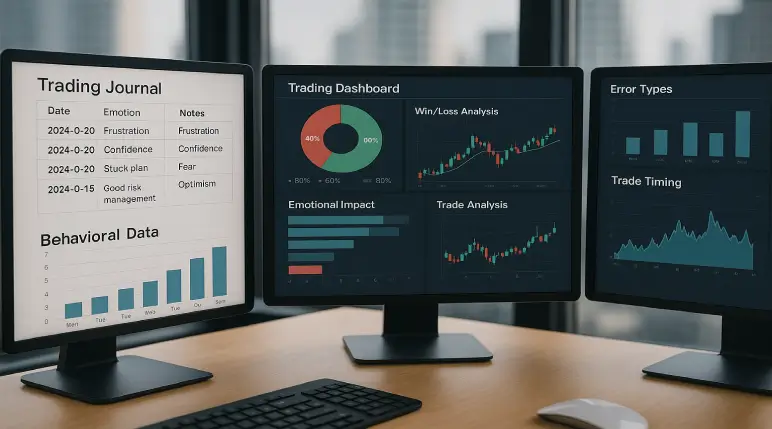
- Your Advanced Trading Dashboard now visualizes this insight — maybe through a warning signal, an emotion-tag on your open trade, or a shift in your risk profile display.
- The result? You get nudged in the moment — not after the damage is done.
That’s the power of a live execution feedback loop. It acts like a co-pilot, scanning for habits and emotions while you focus on market structure and setups.
📊 Real-Life Use Cases of This Integration:
- A trader gets a soft alert: “You tend to enter too early after three wins in a row.” The dashboard flashes a yellow indicator next to the entry button.
- Your dashboard dims or slows order execution if your behavioral analytics suggest elevated emotional bias (e.g., increased position sizing after a loss).
- During high-impact news hours, a journal-detected anxiety pattern automatically lowers your allowed trade size or prompts a breathing exercise widget (yes, that exists).
🎯 Why This Matters:
Without integration, you’re operating like a pilot with two separate dashboards: one for weather, one for fuel. Combined, they guide your route. Separated, they can mislead you.
By integrating AI Trade Journals with Trading Dashboards, you’re building a trading cockpit where execution is informed by behavior, not just price. You’re no longer flying blind to your own tendencies — and that’s what transforms good traders into consistent ones.
Use Case: A Day in the Life of an Integrated Trader
Meet Maya. She’s a swing trader in her early 30s, tech-savvy, disciplined — but human. Like many traders, she knows that managing herself is often more complex than managing her portfolio. That’s why she’s using a fully integrated system — her AI Trade Journal and Advanced Trading Dashboard work hand-in-hand, turning every trade into a feedback-rich experience.
Let’s follow her day.
☀️ 7:45 AM – Pre-Market Routine with Insightful Nudges
Maya logs in, and her AI Trade Journal shows her a quick digest of last week’s behaviors:
“You tend to trade aggressively on Mondays. Consider setting tighter rules for early entries.”
She smiles — it’s true. Mondays are tempting. She sets a limit order only and turns off market buys until 11 AM, directly within her dashboard — thanks to the integration.
The journal also surfaces her most profitable setup from the past 30 days, noting:
“Your highest win-rate setup last month was in ranging markets, not trends.”
That changes her focus for the day.
💻 10:15 AM – In the Trade, With Real-Time Awareness
Maya enters a long position after her dashboard confirms alignment across timeframes. As she opens the trade, her dashboard, fed by her journal’s data, pings a subtle reminder:
“You tend to exit too early when the price stalls near resistance.”
She adjusts her take-profit strategy, setting partial exits instead of a complete closure — a decision she might not have made otherwise.
This is contextualized trading: Maya isn’t reacting emotionally; she’s responding with clarity, supported by her own behavioral history.
📉 1:30 PM – Trade Hits Stop-Loss, Review Kicks In Instantly
The trade doesn’t go her way. No problem — her system logs everything automatically:
- The entry and exit are timestamped.
- Her journal suggests: “Was your entry based on market structure or a fear of missing out?”
- She voice-records a quick reflection, which the journal auto-transcribes and tags by sentiment (“frustration,” “impatience”).
Within seconds, her dashboard updates her behavioral metrics, showing this trade as part of a recurring post-news-entry pattern. It’s not just data — it’s self-awareness visualized.
🌙 6:00 PM – End-of-Day Review with Actionable Trends
In the evening, Maya’s dashboard pulls together the day’s trades, overlays them with behavioral insights, and gives her a brief:
“Today’s emotional volatility score was lower than your weekly average. Good discipline on waiting post-breakout.”
It suggests two things for tomorrow:
- Avoid trading the open, based on past overtrades during high volatility.
- Consider adding a visual cue when entering trades with more than three technical confirmations — her win-rate is 20% higher on those.
For Maya, every trade is more than a transaction — it’s a conversation between her present decisions and past behaviors.
With a fully integrated system, her journal doesn’t just sit in the background waiting to be filled. It talks to her dashboard. Her dashboard doesn’t just show numbers — it learns from her emotional and strategic history.
This is what it means to be an integrated trader: informed in real time, improving over time.

Benefits That Actually Matter (No Fluff)
Let’s skip the hype and talk about what really changes when you integrate your AI Trade Journal with your Advanced Trading Dashboard. No buzzwords, no promises of overnight success — just tangible upgrades to how you think, act, and evolve as a trader.
🧠 1. Reduced Cognitive Load = Faster, More Confident Decisions
When your tools talk to each other, your brain doesn’t have to jump between tabs, spreadsheets, or post-it notes.
- No more mentally juggling what your journal said last week about overtrading.
- No more wondering if your risk today matches your past wins/losses.
Instead, your system provides timely, contextual prompts — so you can focus on what matters most: making data-driven decisions without hesitation.
⚖️ 2. No More “I Knew Better” Moments
We’ve all been there — closing a trade early, entering too soon, breaking our own rules… and thinking, “I knew better.”
With real-time journaling insights baked into your dashboard, your system knows better, too — and it’s not shy about telling you.
- It nudges you when you drift from your edge.
- It visually reinforces rules you’ve written but often forget in the heat of the moment.
This is the difference between reflective trading and responsive trading.
📈 3. Long-Term Pattern Recognition = Smarter You Over Time
The real win isn’t today’s perfect entry — it’s building a system that helps future-you outperform present-you.
- By logging behavioral patterns and syncing them with performance data, the system helps you spot hidden inefficiencies.
- You stop making the same mistake ten times because you see it coming by the third.
That’s proper trading behavior optimization — not just fixing one bad trade, but upgrading how you trade altogether.
📊 4. Enhanced Data Storytelling: Your Trades Now Make Sense in the Big Picture
It’s not just about wins and losses anymore.
Your dashboard becomes a living narrative of your trading journey.
- You can see how emotional decisions correlate with market outcomes.
- You can track how specific strategies evolve over months.
- You can literally tell the story of your growth as a trader, backed by numbers, patterns, and personal insights.
Because when data and context work together, they tell you more than just what happened — they show you why, and what to do next.

Pitfalls and Integration Challenges
Of course, integrating two robust systems isn’t always smooth sailing. While the promise of AI Trade Journals fused with Advanced Trading Dashboards sounds like the holy grail, traders should be aware of the bumps on the road. Here are the biggest challenges you’ll likely face:
⚙️ 1. Tool Compatibility Isn’t Guaranteed
Not every journal is designed to sync seamlessly with every dashboard. APIs can be restrictive, formats don’t always match, and sometimes one platform simply doesn’t “talk” to the other. This lack of tool compatibility can leave you frustrated, juggling workarounds or manual exports instead of enjoying the seamless integration you imagined.
📊 2. The Risk of Data Overload
Here’s a hard truth: more graphs, more heatmaps, and more widgets do not automatically equal better trading. Too much data can blur the signal you actually need. With integration, there’s a temptation to visualize everything — every emotion tag, every performance metric, every alert. But if your screen looks like the cockpit of a spaceship, clarity goes out the window. Data overload is real, and it can paralyze decision-making instead of empowering it.
⏱️ 3. Integration Latency and Sync Delays
When you’re trading, seconds matter. If your journal insights lag behind your dashboard or your execution feed, you’re not getting actual real-time value. Even minor integration latency can mean that the behavioral nudge you need arrives a few seconds too late — after you’ve already clicked “buy.” Traders need to ensure their tools sync quickly enough to influence decisions in the moment.
🧠 4. The Learning Curve
Let’s be honest: interpreting advanced behavioral analytics isn’t always intuitive. A dashboard might tell you that your “emotional volatility index spiked 12%,” but what does that really mean for your next trade? Without proper onboarding or practice, traders risk misinterpreting insights — or ignoring them altogether.
Integration has enormous potential, but it’s not a plug-and-play magic trick. The key is to balance sophistication with simplicity. When handled well, the challenges don’t undermine the integration — they refine it, ensuring the system works for you, not against you.
Future of Trading: Human + AI Symbiosis
For years, the fear has been the same: Will AI replace traders? The short answer? No. The more interesting answer? It will make traders better than they’ve ever been.
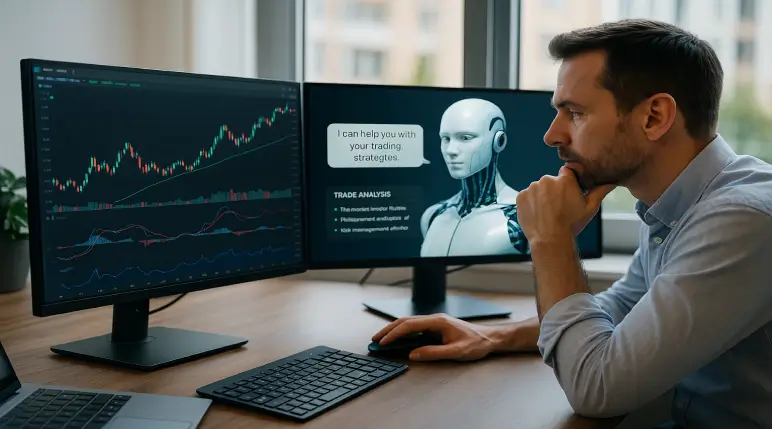
The future of trading isn’t about handing the wheel entirely to machines — it’s about building a cockpit where human judgment and AI insights fly together. This is the essence of Human-AI Trading Synergy.
🧠 Why It’s Not About Replacement, But Augmentation
Markets are as much about psychology as they are about numbers. Fear, greed, hesitation — these are deeply human elements that even the most advanced models can’t fully simulate. But where AI excels is in cutting through noise, tracking habits, and surfacing patterns we would miss.
This creates Augmented Trading Intelligence:
- The human provides intuition, creativity, and adaptability.
- AI provides precision, memory, and real-time nudges.
Together, they form a system stronger than either could achieve alone.
⚡ AI Won’t Trade For You — But It Will Make You Trade Like Your Best Self
Think of AI as the ultimate accountability partner. It doesn’t execute your trades for you, but it makes sure you stay aligned with the rules and strategies that you already know are effective.
- Feeling the urge to revenge trade? The system reminds you of past losses tied to the same emotion.
- Does a setup fit your edge? The dashboard highlights that your win rate drops 20% outside of certain conditions.
- On a hot streak? AI helps temper your confidence before it turns into recklessness.
This isn’t automation taking over — it’s automation holding up a mirror so you can act as your best trading self.
🔮 The Inevitable Standard
Fast forward a few years, and it’s hard to imagine serious traders operating without this integration. Just as nobody today would trade without charts, in the near future, no one will trade without integrated AI trade journals feeding directly into their dashboards.
It won’t be a luxury feature. It will be the standard. A baseline expectation for every serious trading setup, whether you’re managing your personal account or running a fund.
Conclusion
In this article, we’ve explored how Integrating AI Trade Journals with Trading Dashboards shifts trading from scattered note-taking and delayed self-reflection into a unified, feedback-rich command center. Traditional dashboards give you real-time analytics and risk metrics, while journals provide deep behavioral analytics — but separately, they leave gaps. Together, they form a continuous loop where insights don’t just sit in a notebook; they actively shape execution in the moment.
The benefits are clear: reduced cognitive load, smarter data-driven decisions, long-term trading behavior optimization, and real-time journaling insights that cut through bias before it costs you. At the same time, it’s not without challenges — from tool compatibility to data overload and integration latency — but these hurdles are worth navigating for the payoff.
Most importantly, the future of trading isn’t about humans versus AI. It’s about Human-AI Trading Synergy, where machines sharpen our awareness and discipline while we bring creativity, adaptability, and intuition. This kind of Augmented Trading Intelligence ensures traders don’t just survive the markets — they thrive in them.
The takeaway? Journals and dashboards are no longer separate worlds. If you want to trade like your best self, the path forward is integration — because your edge isn’t just in reading the market, it’s in understanding yourself while you do it.


