Portfolio management has evolved significantly, moving away from relying on spreadsheets, intuition, and outdated rules of thumb. In the past, it was enough to diversify across a few stocks or asset classes and hope for the best. However, in today’s hyper-connected world, where markets respond to tweets, trends, and global tensions, that approach feels like using a compass in the age of GPS.
Modern traders — especially millennials and Gen Z — don’t just want performance; they want precision, insight, and adaptability. They crave tools that can keep up with volatile markets, understand risk at a granular level, and align investment strategies with their personal goals and trading styles.
That’s where AI-Powered Portfolio Management steps in.
Far more than a flashy upgrade to traditional systems, AI-powered portfolio management is a dynamic, learning-based approach to managing investments. It utilizes advanced technologies, such as machine learning, natural language processing, and predictive analytics, to analyze vast volumes of market data more efficiently and accurately than any human could.
At its core, AI-powered portfolio management is about shifting from reactive trading to a proactive strategy. It monitors market changes in real-time, evaluates risks, suggests asset reallocations, and can even factor in your behavioral patterns, helping you make smarter decisions without burnout.
In this new era, your portfolio not only reflects your financial decisions but also your values. With AI on your side, it begins to anticipate their needs.
How AI Transforms Portfolio Management
The truth is, most traders today don’t suffer from a lack of data — they’re drowning in it. Newsfeeds, charts, indicators, Twitter threads, sentiment scores — all flowing in real-time. The real problem? Turning that flood of information into smart, confident decisions. And that’s precisely where AI-Powered Portfolio Management steps in — not to replace the trader, but to empower them.
Let’s break down exactly how AI transforms portfolio management from a reactive guessing game into a proactive, insight-driven system.
Data-Driven Decision Making
Human brains are great at pattern recognition — up to a point. However, when markets move quickly and datasets grow even faster, our cognitive limits become apparent. AI-Powered Portfolio Management thrives here by processing millions of data points in seconds: historical prices, economic reports, news headlines, social media sentiment, and more.
But it’s not just about speed. It’s about synthesis. AI doesn’t just collect data — it understands relationships within it. For instance, it can correlate a dip in crude oil prices with geopolitical tweets and flag a warning for energy sector positions before you even finish your coffee.
This type of data-driven decision-making enables traders to filter out noise and focus on meaningful signals, leading to more objective and less stressful outcomes.
Real-Time Risk Analysis and Rebalancing
Markets are emotional. People panic, pump, and sell, repeating the cycle. And in the middle of this chaos, traditional portfolio models — the kind that rebalance quarterly or based on fixed ratios — are simply too slow to respond.
AI-Powered Portfolio Management doesn’t wait for your quarterly meeting. It constantly monitors the portfolio, recalculating risk exposure in real time. Let’s say one of your assets suddenly becomes more volatile due to breaking news — AI systems can immediately assess how that affects your overall portfolio and recommend a rebalance or hedge.
Some advanced systems can even execute those adjustments automatically based on pre-set risk thresholds, removing human delay from critical moments.
The result? You stay agile, protected, and better aligned with your long-term strategy — even in turbulent markets.
Detecting Hidden Patterns Across Asset Classes
Have you ever noticed how Bitcoin sometimes moves in sync with tech stocks? Or how gold behaves oddly during certain election years? These aren’t random coincidences — they’re complex, nonlinear patterns. And most of the time, they go unnoticed by human eyes.
AI, especially machine learning models, are designed to detect hidden patterns that traditional tools can’t. These patterns might span across asset classes (equities, commodities, crypto, forex), timeframes, or even macroeconomic events.
For example, AI can uncover that certain small-cap stocks outperform in the 30 days following an interest rate hike — even if that’s never been evident on the surface. It can also detect behavioral biases in your trading habits — like always going heavy on tech after a loss — and help correct them.
With this kind of intelligence, you’re no longer just reacting to the market — you’re anticipating it.
In short, AI doesn’t just make portfolio management more efficient — it makes it smarter. By combining the speed of machines with the intuition of human traders, AI-powered portfolio management marks a new era of trading, where insight replaces instinct and opportunities are never missed.
🧠 Risk Optimization with AI
Risk is the part of trading that never sleeps. It creeps in during sudden news drops, global events, or even when your own emotions get the better of you. But here’s the good news: with AI-Powered Portfolio Management, risk no longer has to be your blind spot — it becomes your strategic edge.
Behavioral Data Meets Market Volatility
Every trader has patterns. Some panic-sell too early. Others hold on too long, hoping for a miracle. AI doesn’t just observe market movements — it watches you. It learns from your behaviors, identifies emotional triggers, and starts building a personalized risk profile.
When combined with real-time volatility tracking, AI can detect when your typical trading behavior might clash with market conditions — and warn you before mistakes happen. That’s not just smart tech; that’s a trading therapist in your pocket.
Adaptive Models That Respond to Sudden Shifts
Markets don’t wait for anyone. A single news headline can send shockwaves through multiple asset classes. Traditional portfolio systems might take days to adjust. AI-powered systems? They react in seconds.
These adaptive models are trained on historical data, live feeds, sentiment analysis, and even macroeconomic indicators. If volatility spikes or correlations break, your portfolio rebalances — not in panic, but in precision.
Think of it as having a co-pilot who already saw the turbulence coming and adjusted the altitude while you were still sipping your coffee.
From Gut Feeling to Predictive Confidence
We’ve all had that gut feeling — the one that sometimes hits, but often misses. AI doesn’t rely on hunches. It calculates, simulates, and predicts. Through machine learning, it builds a probabilistic map of outcomes based on thousands of variables.
The result? Instead of wondering “Should I exit this position?”, you get a data-backed recommendation with a risk score and forecast range. That kind of clarity doesn’t just reduce stress — it increases consistency.
Confidence in trading isn’t about being fearless. It’s about knowing that your decisions are backed by logic, not just hope.
More Intelligent Asset Allocation with AI Algorithms
Ask ten traders how they build their portfolios, and you’ll likely get ten different answers. Some swear by fixed percentages, others follow momentum or fundamentals, while a few simply go with their instincts. But with AI-Powered Portfolio Management, there’s a shift — from subjective guesswork to intelligent, adaptive allocation that evolves with you.
🔹 Custom Portfolios Based on Trader Profiles
AI doesn’t do “one-size-fits-all.”
Instead, it starts by analyzing your unique trader profile:
- What’s your risk tolerance?
- Are you a swing trader, a long-term investor, or a crypto enthusiast?
- How do you react under pressure — do you cut losses quickly or hold too long?
These behavioral and performance patterns help AI tailor a portfolio that aligns with your goals, psychology, and trading history. It’s like having a portfolio that’s been trained on you, and keeps learning every time you make a move.
🔹 AI and Diversification: Beyond the Basics
Diversification is nothing new. We’ve all heard: “Don’t put all your eggs in one basket.” But AI takes this further.
Instead of just spreading assets across sectors or asset classes, AI considers:
- Asset correlations in real time
- Volatility clusters and drawdown risks
- Geopolitical signals, social sentiment, and macro trends
That means if two assets were historically uncorrelated but suddenly start moving together, the AI spots it before you do and adjusts. It’s not diversification on paper. It’s dynamic, data-driven diversification, recalibrated to real-world conditions, not outdated models.
🔹 Forecasting Potential Returns with Deep Learning
Here’s where things get futuristic — and a little mind-blowing.
Using deep learning models, AI doesn’t just analyze the past; it also predicts the future. It projects forward, identifying potential return scenarios across thousands of simulations. These models ingest:
- Historical market data
- Technical indicators
- Macro-economic inputs
- Even alternative data,ike news headlines or social media chatter
The outcome? A probabilistic forecast that helps you understand which assets have the highest expected value given your objectives, not based on hype or gut feeling, but pure, intelligent probability.
Think of it as:
“Here’s not just what’s performing well — here’s what’s likely to perform best for you, based on what the AI knows about the market and you.”
In short, AI-powered portfolio management provides traders with a level of personalization, intelligence, and foresight that was once only available to hedge funds with teams of quantitative analysts. Now, it’s in your hands — and it’s only getting smarter.

🔧 Top Tools & Platforms Using AI for Portfolio Management
The world of AI-Powered Portfolio Management isn’t just theory anymore — it’s live, evolving, and in the hands of thousands of traders who are already using it to optimize their strategies.
Let’s explore some of the top platforms that are transforming portfolio management with AI, including real-life use cases from traders, and how these tools differ fundamentally from traditional systems.
🚀 Popular Platforms & Their Key Features
1. Wealthfront
A pioneer in robo-advisory services, Wealthfront utilizes AI to automate tasks ranging from tax-loss harvesting to daily rebalancing. What sets it apart is its ability to create customized investment paths based on your goals (e.g., buying a house, early retirement) and adjusting them as your situation evolves.
- AI Features: Automated risk management, smart reallocation, cash flow planning
- Best for: Passive investors who want intelligent automation without constant tweaking
2. Q.ai (by Forbes)
Q.ai takes a modular approach with its “Investment Kits” powered by AI. Each kit focuses on a specific theme (such as tech, inflation protection, or momentum plays) and adjusts automatically in response to market changes.
- AI Features: Strategy rotation, machine learning-driven predictions, thematic kits
- Best for: Young traders looking to experiment with AI without high barriers to entry
3. Kavout
Kavout offers a more active trading experience, utilizing a proprietary tool called “Kai Score”. This score is generated using AI models that analyze financials, news, price trends, and sentiment to rank stocks.
- AI Features: Stock ranking engine, predictive analytics, market scanning
- Best for: Hands-on traders who want to leverage AI without giving up control
4. Zeno Markets
An emerging tool that combines portfolio simulation with AI-guided diversification. Zeno uses user behavior (e.g., past trading history, risk appetite) to suggest optimal allocation models and test them in various market conditions.
- AI Features: Portfolio stress testing, behavioral analysis, simulated rebalancing
- Best for: Swing traders and semi-pros optimizing long-term strategy
🧑💻 Use Cases from Real Traders
- Sarah (32, part-time trader): Used Q.ai’s Inflation Kit during volatile interest rate hikes. The AI automatically rotated assets toward inflation-resistant ETFs, outperforming her manual picks by 12% in one quarter.
- Daniel (29, crypto & tech stocks): Leveraged Kavout’s Kai Score to filter out hype stocks during an AI-driven market rally. His portfolio avoided two significant dips thanks to AI’s pattern detection.
- Leila (37, passive investor): Moved her retirement savings to Wealthfront. The AI rebalanced her holdings during a downturn without panic selling — and kept her strategy aligned with her long-term target.
⚖️ How These Tools Differ from Traditional Portfolio Solutions
| Feature | Traditional Tools | AI-Powered Tools |
| Strategy | Static | Dynamic & adaptive |
Decision basis | Historical data | Real-time data + machine learning |
User customization | Limited | Hyper-personalized |
Risk analysis | Periodic, manual | Continuous, automated |
Rebalancing | Quarterly or yearly | Daily or event-based |
| Learning & improvement | None | Constant feedback loop |
While traditional tools rely on pre-set rules and historical averages, AI-Powered Portfolio Management solutions evolve alongside the market — and alongside you.
They don’t just follow your commands; they anticipate your needs, flag risks before they become problems, and offer more innovative ways to stay diversified, hedged, and focused on your financial goals.
📌 Takeaway: If you’re still logging trades in spreadsheets or waiting for your financial advisor to send you quarterly reports, it might be time to level up. These AI tools are not just for Wall Street — they’re built for you, the modern trader, who wants speed, clarity, and control in one intelligent system.
Challenges & Ethical Considerations
Let’s get one thing straight: AI-Powered Portfolio Management isn’t a magic wand. It’s powerful, yes — but it’s not perfect. And as with any transformative tool, it brings along its own set of challenges and ethical questions.
1. Overreliance on Automation
When machines start making significant decisions, it’s easy to lean back and go hands-off. But here’s the catch: markets evolve, and so do humans. If traders rely entirely on automation without understanding the logic behind the moves, they risk losing their strategic edge.
Automation should amplify your decision-making, not replace it. Just like cruise control in a car, it works best when you’re still steering the vehicle. Blind faith in AI can lead to unintended consequences, like missed market anomalies, black swan events, or even misaligned goals.
2. Transparency and Algorithmic Bias
One of the most significant ethical dilemmas in AI-powered portfolio Management is the black box problem. Many AI models, especially those based on deep learning, are notoriously difficult to interpret. Why did the algorithm reduce your crypto exposure? Why did it favor tech over energy? Sometimes, even the creators don’t know.
And then there’s the issue of bias. AI models are trained on historical data, but that data isn’t always fair or balanced. If the input is flawed, the output can reinforce existing inequalities or push strategies that exclude specific market opportunities altogether.
This lack of transparency not only affects trust but also complicates regulatory compliance and risk management.
3. Finding the Human-AI Balance
AI can analyze billions of data points in seconds. But it can’t feel the pulse of a market room, sense geopolitical tension from a politician’s body language, or understand your dreams and fears. That’s where you, the trader, come in.
The ideal scenario is symbiosis: AI handles the heavy data lifting, while you bring context, intuition, and purpose. Think of AI as your ultra-sharp analytical assistant — not your financial overlord.
The future of AI-powered portfolio management isn’t about replacing human judgment. It’s about elevating it. When used wisely, AI won’t just make you faster. It’ll make you better.

🚀 Future of AI in Portfolio Management
What if your portfolio didn’t just know the market, but also knew you?
That’s not sci-fi anymore. The next frontier in AI-powered portfolio management is hyper-personalized, emotionally intelligent, and designed to evolve with your life, not just your trades.
🎯 Hyper-Personalization: One Portfolio, One Identity
We’re moving beyond one-size-fits-all strategies. AI is beginning to craft portfolios that reflect who you are — your risk tolerance, your values, your trading history, even your psychological profile. It’s like having a financial advisor who not only knows your bank balance but also understands your ambitions, fears, and impulses.
Through machine learning and behavioral analytics, AI can learn how you react under stress, how often you check your portfolio, and when you’re most likely to make impulsive decisions — and adjust accordingly. This means fewer regrets, more consistency, and a portfolio that feels right for you.
🌱 Integration with Lifestyle & Financial Goals
Why should your portfolio exist in a vacuum?
Modern traders aren’t just optimizing for returns — they’re optimizing for freedom, stability, and purpose. Whether you’re saving for early retirement, planning to travel the world, or launching a side hustle, AI can now help translate lifestyle goals into a financial strategy.
These innovative systems can map out a path that considers cash flow needs, major life events, and income variability, and adjust the asset allocation accordingly. Want to go part-time next year? Your portfolio will prepare you for it. Expecting a baby? AI will reduce risk exposure and build a buffer. It’s not just trading anymore — it’s life planning with a neural engine.
🤝 AI + Human Insight: The Hybrid Model
Despite all the data and processing power, AI doesn’t dream. It doesn’t understand ambition. That’s your job.
The future isn’t about replacing human traders with algorithms — it’s about creating a hybrid model where intuition and technology collaborate. You bring the vision, the context, the “why.” AI brings precision, consistency, and the “how.”
In this model, you’re not handing over control. You’re upgrading your toolkit. You ask better questions. The system gives sharper answers. Together, you build a portfolio that’s not just optimized — it’s alive, intelligent, and aligned with your long-term vision.
conclusion
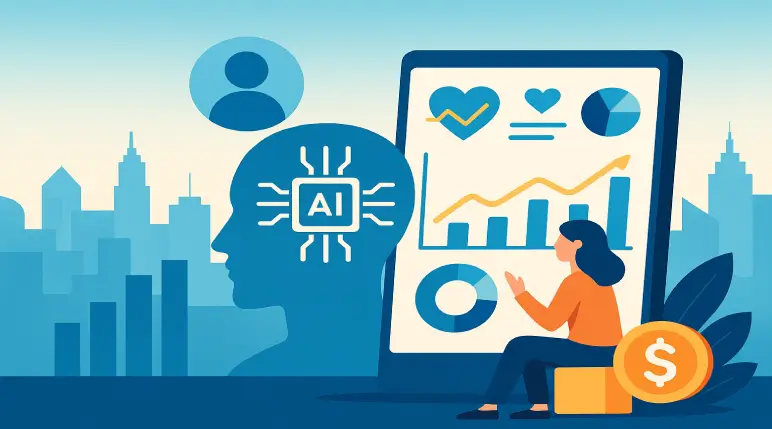
In this article, we explored the transformative power of AI-powered portfolio management and how it’s redefining the way modern traders approach risk, asset allocation, and decision-making. We uncovered how AI goes beyond automation — acting as an intelligent partner that learns from your behavior, adapts to market shifts, and helps build portfolios that are not only balanced but deeply personalized.
From optimizing risk with real-time insights to crafting smarter, data-driven allocation strategies, AI is turning complexity into clarity. We also examined the top tools in the space, potential ethical concerns, and the future of this evolving field.
Ultimately, this isn’t just about using machines to manage money — it’s about empowering traders with tools that multiply human intuition with machine precision. If you’re ready to trade smarter, not harder, AI-Powered Portfolio Management isn’t just an option — it’s your next competitive edge.


