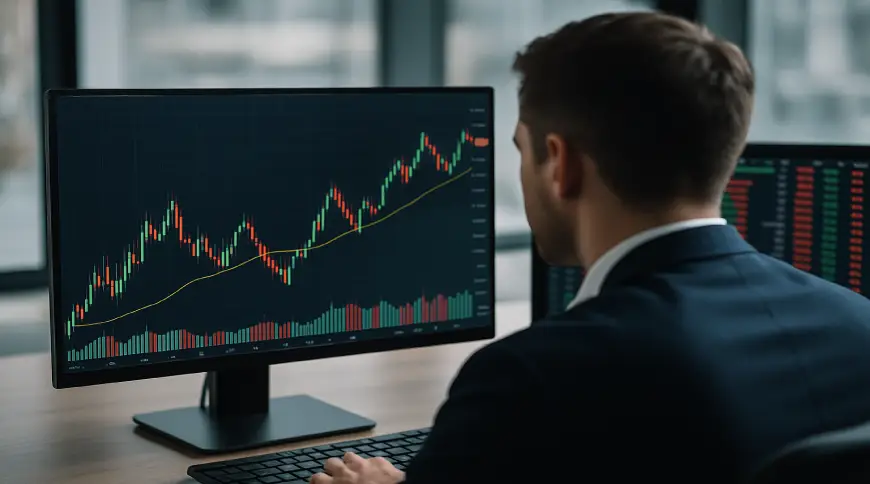
In today’s hyper-connected financial markets, market sentiment moves faster than fundamentals. A rumor on Reddit, a tweet from a billionaire, or a viral TikTok video can shift billions of dollars in minutes. Traditional tools—like earnings reports, technical indicators, or macroeconomic data—are still helpful, but they often lag behind the emotional pulse of the crowd.
Market sentiment is no longer just a buzzword—it’s a key driver of price movements. Understanding how traders feel, what they fear, and where the collective mind is heading can give you an edge that numbers alone can’t offer. But here’s the challenge: emotions are messy, irrational, and hard to quantify. That’s where AI and price movement prediction step in.
We’re witnessing a fascinating convergence: the raw, unpredictable nature of human psychology meeting the cold, calculated power of artificial intelligence. The result? Machines that can not only crunch numbers, but also analyze emotions at scale.
This intersection of psychology and machine intelligence is transforming how we interpret markets. It’s no longer about just understanding what happened, but why it happened, nd what might happen next.
In this article, we’ll dive into how AI is being trained to read the emotional undercurrents of financial markets, and whether it can truly anticipate where prices are headed before humans even realize what they’re feeling.
What Is Market Sentiment?
When people talk about market sentiment, they often reduce it to two basic emotions: fear and greed. But the reality is far more complex. Market sentiment is the collective emotional state of investors and traders, shaped by a swirling mix of hope, doubt, anxiety, excitement, overconfidence, and panic.
It’s the emotional context behind every trade, the mood that builds up in forums, comment sections, and news headlines. It explains why markets rally on bad news or crash despite strong earnings. Numbers tell part of the story—but emotion fills in the gaps.
It’s Not Just Fear and Greed
Sure, fear and greed dominate in extreme moments. But between those peaks are more subtle forces at play:
- Optimism that things will improve
- Skepticism that the rally is real
- Complacency after long periods of gains
- Frustration when the market moves sideways
- Regret from missed opportunities
- FOMO when watching others win
These emotional nuances influence how people interpret information, react to volatility, and make buy or sell decisions. And the more unpredictable the market becomes, the more powerful these emotions grow.
The Emotional Layers Driving Investor Behavior
Think of market sentiment as an emotional barometer. It reacts not only to what’s happening, but to how people feel about what’s happening. A small earnings miss might trigger a sell-off if confidence is already shaky. A vague social media rumor might spark a surge if hope is high and expectations are stretched.
Investor behavior is rarely about logic alone. Emotions drive reactions, and reactions drive price movements. That’s why understanding the emotional layers behind market moves is essential—and why AI tools trained on sentiment signals are becoming critical in modern trading strategies.
Because in the end, it’s not just the data—it’s how people feel about the data that moves the markets.

The Role of Psychology in Price Movements
Markets may seem rational on the surface—driven by earnings, economic indicators, and company news—but beneath it all lies something far more powerful: human psychology. The way we think, feel, and react plays a significant role in shaping market behavior. When you zoom out from the charts, it becomes clear: prices don’t just move because of numbers—they move because of people.
Herd Mentality, Confirmation Bias, and FOMO
Three psychological forces are especially influential in trading:
- Herd Mentality: Most traders don’t want to be the outlier. When everyone is buying, it feels safer to follow. This desire to conform often fuels bubbles—think of meme stocks, crypto rallies, or housing booms. The crowd can be right… until it’s very wrong.
- Confirmation Bias: Once we believe something, like “this stock is undervalued, —we tend to look for information that supports our view and ignore anything that contradicts it. This selective filtering reinforces bad decisions and keeps traders locked into losing positions longer than they should.
- FOMO (Fear of Missing Out): Possibly the most potent emotion in modern markets. Social media and real-time trading apps amplify this feeling. Watching others profit can push even cautious traders to jump into risky trades at the worst possible time.
How Emotions Shape Buying and Selling Decisions
Emotions cloud judgment. A trader might sell too early out of fear, or buy too late out of excitement. Panic leads to selling at the bottom, while euphoria fuels buying at the top. These behaviors are not isolated—they spread like wildfire in a connected world.
Psychological triggers don’t just influence individuals; they create waves of momentum that ripple through the entire market. One person’s fear can become a group’s stampede. And in these emotional cycles, logic often takes a back seat.
That’s why understanding the emotional dynamics behind price movements is critical. Traders who ignore psychology are trading blind. Those who learn to recognize emotional patterns—especially when magnified by crowd behavior—gain a significant edge.
And as we’ll see in the following sections, this is precisely where AI is stepping in: not just to crunch numbers, but to read emotions, spot patterns, and decode the psychology that moves markets.

Enter AI: Can Machines Understand Human Emotion?
For decades, machines were excellent at numbers, but terrible at emotions. They could calculate, simulate, and optimize—but understanding how humans feel? That was off-limits until now.
Thanks to advancements in artificial intelligence, especially in the field of Natural Language Processing (NLP), machines are becoming surprisingly good at picking up on emotional signals. Today’s AI isn’t just analyzing numbers—it’s reading tone, context, and sentiment in the words we write online.
From Raw Data to Emotional Patterns
Every second, traders and investors flood the internet with opinions—tweets, Reddit threads, news comments, Telegram chats, and financial blogs. Hidden in this chaos is a wealth of emotional data: excitement, fear, skepticism, hope.
AI models are trained to process this unstructured content and detect emotional patterns. They can identify when language turns more fearful, when excitement starts to build, or when confidence suddenly shifts.
What’s powerful is that these emotional trends often emerge before prices react. For instance, if a large number of posts start mentioning “crash” or “uncertainty” about a stock, it may signal growing anxiety, even if the chart hasn’t moved yet.
AI turns this invisible layer of emotional momentum into measurable signals.
Natural Language Processing (NLP) and Sentiment Detection
NLP is the engine behind this emotional intelligence. It allows machines to:
- Analyze financial news and assign a sentiment score based on tone (positive, neutral, or negative)
- Scan tweets and social media for spikes in keywords like “bullish,” “panic,” or “sell.”
- Monitor forums like Reddit or StockTwits to detect shifts in crowd sentiment
- Track how specific assets are being talked about in terms of excitement, fear, or doubt
Some systems even go deeper, detecting sarcasm, urgency, or emotional intensity. They aggregate thousands of posts per minute and visualize whether the market is leaning optimistic or pessimistic in real time.
In essence, AI and price movement prediction are no longer limited to complex data. It’s now about understanding the human conversation that drives the market. And for the first time, machines are learning to listen.

AI and Price Movement Prediction: Can It Work?
The idea that machines can predict market direction by analyzing emotion used to sound like science fiction. But today, with massive computing power and refined machine learning models, it’s no longer just possible—it’s already happening.
Algorithms That Detect Shifts Before Charts Reflect Them
Markets react to emotion—often before the numbers show it. When anxiety builds up in the trading community or confidence starts to fade, it usually surfaces in language long before it shows in price action.
Modern AI models, especially those trained on massive datasets of financial language, are capable of picking up on these subtle emotional shifts. They scan vast volumes of data—tweets, headlines, blog posts, analyst comments—and identify changes in tone, intensity, and frequency.
For instance, if mentions of a particular stock spike alongside increasingly negative sentiment, the algorithm flags a potential downside move, even if the price hasn’t dropped yet. Conversely, a surge in optimistic discussions around an overlooked asset might suggest a hidden bullish trend forming under the surface.
This is the power of AI and price movement prediction: spotting behavioral tremors before they turn into market earthquakes.
Real-World Examples
Let’s consider a few real-world scenarios—no brand names, just practical insights:
- Social Sentiment Trackers: These tools monitor millions of posts across Twitter, Reddit, Telegram, and financial forums. They don’t just count mentions—they analyze how people are talking. A rising tide of excitement, fear, or confusion around an asset is detected and visualized as sentiment curves, giving traders a heads-up before prices react.
- AI-Powered News Analyzers: These systems process hundreds of financial headlines per second. They break down each article’s tone, urgency, and impact level. For example, if several news stories around a sector shift from neutral to cautiously negative, an AI model can flag a potential change in trend, even before analysts issue warnings.
- Keyword & Emotion Heatmaps: Some models generate heatmaps based on specific emotional keywords like “crisis,” “opportunity,” or “breakout.” If these words start clustering around a particular ticker or market sector, it could indicate building momentum or impending volatility.
These tools don’t offer guarantees. But they offer something almost as valuable: early insight. They allow traders to react faster, prepare smarter, and manage risk based on emotional signals—not just price charts.
In the end, AI won’t replace your trading strategy—but it can act as a radar system, scanning the emotional horizon for turbulence or tailwinds before you even see them coming.
Strengths and Limitations of AI Sentiment Analysis
As impressive as AI has become in reading market sentiment, it’s not without flaws. Understanding where it excels—and where it struggles—is essential for using these tools effectively in your trading decisions.
Where AI Shines
AI sentiment analysis shines in scale, speed, and consistency.
- Massive data processing: AI can process millions of tweets, news headlines, blog posts, and comments in real time. What would take a human team days or weeks, an algorithm can handle in seconds.
- Unbiased filtering: Unlike humans, AI doesn’t get emotionally attached to a stock or swayed by popular opinion. It evaluates sentiment objectively based on patterns and keywords.
- Pattern recognition: AI can detect rising or falling emotional tones across multiple platforms—Reddit, Twitter, financial news, Telegram—and turn that into actionable signals before most traders catch on.
- Quantifiable output: Sentiment scores, trend curves, and emotion-based alerts give traders a structured way to incorporate psychological factors into their decision-making.
This makes AI a powerful tool for identifying crowd behavior, sentiment shifts, and emotional momentum, especially in fast-moving or hype-driven markets.
The Blind Spots: Sarcasm, Cultural Nuance, Irrational Hype
Despite its strengths, AI still lacks accurate emotional intelligence. It doesn’t “understand” emotions—it interprets patterns. And that leaves room for error.
- Sarcasm and irony: AI models often misread sarcastic comments. For example, “Yeah, great time to buy this garbage” might be interpreted as positive due to keywords like “great” and “buy.”
- Cultural and contextual nuance: Different communities use slang, humor, and tone differently. AI might misinterpret or oversimplify meaning, especially in meme-heavy environments like WallStreetBets.
- Irrational hype: During times of euphoria or panic, sentiment analysis can go to extremes. A flood of overly optimistic or terrified messages can distort the signal, making it hard to tell the difference between genuine momentum and emotional noise.
- Lack of long-term memory: Most sentiment tools analyze the now—they don’t always weigh context from prior cycles or understand broader macroeconomic forces.
This doesn’t mean AI sentiment analysis is unreliable. It means you need to treat it like any other market indicator: useful, but not infallible.
Bottom line?
AI is brilliant at detecting emotional ripples in the market. But just like a weather forecast, it’s not perfect. Use it to guide your thinking, not to replace it.

How Traders Can Use AI-Based Sentiment Tools Smartly
Just because AI-based sentiment tools are powerful doesn’t mean they should be followed unthinkingly. The smartest traders know that these tools are most effective when used alongside other forms of analysis, not as a standalone decision-maker.
Don’t Rely Blindly — Combine with Technicals and Fundamentals
Sentiment analysis tells you how people feel—but it doesn’t tell you whether those feelings are justified. That’s why it’s essential to pair AI sentiment insights with:
- Technical analysis: Look for alignment between sentiment trends and chart signals like volume spikes, support/resistance levels, or breakout patterns.
- Fundamental analysis: Is the buzz around a stock or asset supported by strong earnings, good management, or macroeconomic trends? If not, the sentiment may be all hype.
For example, if AI shows rising bullish sentiment on a stock, but the RSI is overbought and earnings are weak, it might be a false signal—or a risky short-term trade.
Savvy traders use AI to add psychological context to their setups, not to replace strategy.
Use as a Compass, Not a Map
Think of AI sentiment tools as your emotional compass. They help you understand where the crowd is leaning, how strong the sentiment is, and whether shifts are happening beneath the surface.
But a compass doesn’t tell you exactly how to get from point A to point B. That’s where your trading system, experience, and judgment come in.
Ask yourself:
- Does the sentiment trend confirm or contradict my existing analysis?
- Is the emotional tone stable, rising, or swinging wildly?
- Am I reacting emotionally, or am I interpreting sentiment objectively?
Used wisely, AI becomes a way to anticipate risk, spot opportunity, and gauge the emotional temperature of the market. But only you can decide how to act on that information.
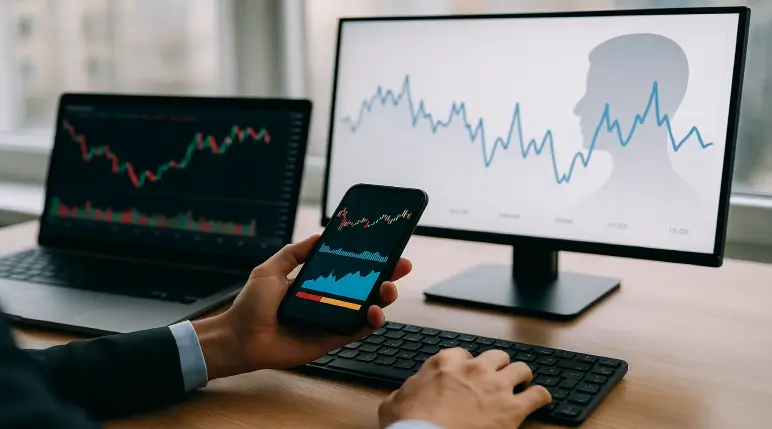
Conclusion
In this article, we explored the fascinating intersection between AI and price movement prediction, with a focus on how artificial intelligence is being used to decode market sentiment—the emotional engine behind price action.
We unpacked what market sentiment is, beyond the oversimplified labels of fear and greed. We looked at the deep psychological forces—like herd mentality, confirmation bias, and FOMO—that influence buying and selling decisions every day. Then, we examined how modern AI, powered by Natural Language Processing (NLP), is learning to analyze emotional signals from tweets, news headlines, and online forums—often detecting shifts before charts react.
We also covered the strengths and blind spots of AI sentiment tools: their unmatched speed and scale on one hand, and their struggles with sarcasm, cultural nuance, and irrational hype on the other. Finally, we discussed how smart traders can use these tools effectively, not as a crystal ball, but as an emotional compass that complements technical and fundamental analysis.
The bottom line? AI can’t replace human intuition, but it can reveal what the crowd is feeling, often before that feeling hits the charts. In fast-moving, emotionally charged markets, that insight could be the edge you need. Use AI wisely, pair it with strategy, and remember: data informs, but you decide.


