
A highly effective tool that numerous traders often neglect is the practice of trade journaling. A trade journal serves as a comprehensive record of each trade executed, encompassing all the variables that impact the decision-making process. This includes entry and exit points, trade size, the rationale underlying each action, and even the emotional state experienced during the trade.
While it might seem like just another task to add to your routine, the truth is that accurate and effective trade journaling is one of the most important steps toward mastering your craft. It allows traders to spot patterns, track their progress, identify strengths and weaknesses, and ultimately refine their trading strategies over time. Without it, you’re essentially flying blind, hoping that luck will guide your trades, rather than using data and analysis to improve them.
However, despite its importance, many traders make common mistakes in trade journaling that undermine the effectiveness of their journal. These mistakes can lead to a lack of clarity, inaccurate assessments, and missed learning opportunities. Whether it’s neglecting to track emotions, skipping journal entries, or focusing too much on profits, these errors can keep you from leveraging your journal to its fullest potential.
In this article, we’ll explore the most frequent mistakes traders make when journaling their trades and, more importantly, how you can avoid them to ensure your trade journal becomes a powerful tool for improvement.
Mistake 1: Lack of Detail in Trade Entries
One of the most common mistakes traders make when journaling their trades is failing to include enough detail in their trade logs. Many traders, especially beginners, often record only basic information like the entry and exit times without capturing the full picture. But why is it so crucial to include comprehensive details in your trade journal?

Why Detailed Trade Logs Are Essential
Every trade you make is a learning opportunity. A detailed trade journal allows you to track more than just the financial outcome (profit or loss). It helps you analyze the reasons behind your decisions, the market conditions at the time, and your emotional state during the trade. This deeper analysis is key to understanding your strengths and weaknesses and refining your strategy over time.
Without these details, you can’t properly assess what went right or wrong in each trade, which makes it harder to improve your future trading decisions. A detailed journal can also help you spot patterns in your trading behavior—patterns that may not be obvious at first glance but could be crucial for your long-term success.
Common Mistakes in Trade Journaling Due to Insufficient Data
When traders fail to record enough data, they often make the following mistakes:
Missing Entry/Exit Reasons: One of the most common errors is neglecting to write down why you entered or exited a trade. Did you make the decision based on a technical indicator, a fundamental analysis, or a gut feeling? Without this context, you can’t evaluate whether your reasoning was sound or if you’re repeating the same mistakes.
Not Capturing Market Conditions: Traders often forget to note the market environment during their trade. Were you trading in a trending market, a sideways market, or a volatile one? Were there any significant news events or economic reports that could have influenced the price? These factors can heavily impact your trade, and not documenting them makes it harder to understand the outcome.
Omitting Trade Size: Not recording the size of your position can lead to misunderstandings about your trading results. The outcome of a trade depends not only on the direction of the market but also on how much capital is at risk. By overlooking trade size, you may fail to grasp the risk-to-reward ratio and its impact on your overall performance.
How to Avoid This Mistake by Recording All Key Aspects of Each Trade
To avoid this mistake, ensure you capture all relevant details for each trade. Here’s what you should include in your trade journal:
Entry and Exit Reasons: Always note down the rationale behind entering and exiting a trade. Whether it’s based on a technical setup, news event, or personal strategy, understanding why you made a specific decision is essential for future improvement.
- Market Conditions: Record the state of the market when you entered the trade. Was the market trending or ranging? Were there major news releases affecting the assets you traded? This helps you assess whether the market conditions played a role in the outcome of your trade.
Trade Size: Note the position size for each trade, as this will help you assess your risk management and understand how it relates to the potential outcome of the trade. Understanding how your trade size impacts your results is vital for refining your approach to risk and reward.
Emotional State: Your emotions can significantly affect your trading decisions. If you were anxious, overly confident, or uncertain, note that in your journal. Tracking your emotional state helps you identify when emotions are influencing your decisions and allows you to work on managing them.
By recording all these key aspects, your trade journal will become a valuable tool for ongoing improvement. With detailed entries, you can look back on your trades and learn from them more effectively, identifying patterns and areas of growth.
Mistake 2: Inconsistent or Irregular Journaling
Another significant mistake that traders often make is not journaling their trades consistently or skipping entries for some trades. While it might seem like a minor issue, irregular journaling can have a serious impact on your ability to track your progress and improve your trading performance.

The Impact of Not Journaling Consistently or Missing Entries for Some Trades
When traders don’t record every trade, or they fail to journal consistently, they risk losing valuable insights. Missing even one or two entries can make it difficult to identify patterns in your trading behavior or pinpoint the reasons behind your successes and failures. If you’re not tracking your trades in real time, you may forget crucial details that could have a significant impact on your analysis later.
Additionally, skipping journal entries can create gaps in your data, making it harder to spot any recurring mistakes or weaknesses in your strategy. Over time, this lack of consistency can hinder your growth as a trader because you won’t have a complete record of your decisions to learn from.
Inconsistent journaling also prevents you from seeing the bigger picture of your overall trading performance. It may be tempting to skip journaling after a few losing trades, thinking it won’t affect your future performance, but in reality, this can lead to a false sense of confidence or confusion about what’s working and what’s not.
Why Consistency is Key in Tracking Trading Performance
Consistency is the foundation of effective trade journaling. By recording every trade, regardless of whether it was profitable or not, you create a complete and accurate picture of your trading history. Consistent journaling enables you to track your progress, spot trends in your behavior, and adjust your strategy accordingly.
With consistent entries, you’ll also be able to measure your performance over time. For example, you might notice that you are consistently successful when trading during specific market conditions or that certain times of day lead to better results. Without regular entries, these trends may go unnoticed, and you’ll miss opportunities for improvement.
The key to progress as a trader lies in learning from your past mistakes and successes, and consistency in journaling makes that process much easier.
Tips for Setting Up a Routine to Make Journaling a Daily Habit
Establishing a routine for journaling your trades doesn’t have to be difficult, but it does require commitment. Here are some tips to help you build a habit of consistent trade journaling:
- Set a Specific Time for Journaling: Make it a part of your daily routine by setting aside a specific time each day to journal your trades. Whether it’s right after the market closes or before bed, having a set time will make it easier to stick to the habit.
- Create a Simple Template: Use a straightforward template that makes it easy to record all the necessary details without overcomplicating the process. Include fields for entry and exit reasons, trade size, market conditions, and emotional state, as well as space for any additional notes.
- Start Small and Build Momentum: If you’re not used to journaling, don’t overwhelm yourself by trying to record every tiny detail right away. Start with the most important elements—entry/exit reasons, position size, and outcomes—and gradually add more information as you get used to the process.
- Use Technology to Your Advantage: If you’re busy or prefer a more automated approach, consider using journaling apps or platforms designed for traders. These tools often provide templates and allow you to quickly input your trades, which can help maintain consistency.
- Set Reminders: If you tend to forget, set reminders on your phone or computer to journal your trades at the same time each day. Visual cues can help reinforce the habit until it becomes automatic.
- Review Your Journal Regularly: Take time each week or month to review your trade journal and identify any patterns. Reflecting on your trades helps you stay accountable and gives you insights into your progress. This regular review also helps reinforce the habit of journaling.
- Make It a Part of Your Trading Plan: Treat your trade journal as an essential part of your overall trading plan. When journaling becomes a non-negotiable part of your process, you’ll be more likely to stick to it.
By setting up a consistent journaling routine, you’ll make it much easier to track your performance, learn from your trades, and continuously improve your trading skills. Regular, reliable journaling helps you build a comprehensive record of your trading journey, and over time, this will translate into more effective strategies and greater success in your trades.
Take your trading to the next level with Master the Markets at AryaMerX! Access exclusive tools, expert guidance, and proven strategies to dominate the markets.
Mistake 3: Focusing Only on Profits and Losses
One of the most common mistakes traders make when journaling their trades is focusing too much on the financial outcomes—profits and losses—rather than the entire process and strategy behind the trades. While tracking profits and losses is undoubtedly important, an overemphasis on these financial results can create a distorted view of a trader’s overall performance and hinder long-term growth.
Overemphasis on Financial Outcomes (Profit and Loss)
It’s easy to fall into the trap of measuring trading success purely by the amount of money gained or lost in each trade. Many traders, especially beginners, tend to become overly fixated on the numbers, either celebrating gains or becoming discouraged by losses. However, this narrow focus on financial outcomes can lead to several problems:
- Ignoring the Process: By concentrating only on profits or losses, traders overlook the broader picture—the strategy, decision-making process, and market conditions that led to that result. The market is dynamic, and a single profitable trade doesn’t necessarily indicate a successful strategy, nor does a loss automatically mean a failed one. The process behind each trade is just as important, if not more so, than the outcome.
- Misleading Perception of Strategy Effectiveness: When profits become the main metric, traders may wrongly conclude that their strategy is effective based solely on a few profitable trades, even if the strategy is fundamentally flawed. Similarly, a loss could be mistaken for a flaw in the strategy, even though it could have been a result of external factors, such as unpredictable market conditions or emotional trading.

How Focusing Solely on Profits Can Mislead Traders About the Effectiveness of Their Strategy
Focusing only on the profit and loss figures can mislead traders in a few critical ways:
- Survivorship Bias: A trader may look at a string of successful trades and assume their strategy is perfect. But this “survivor” bias ignores the trades that didn’t work out. If a trader only focuses on profits, they might miss the opportunity to learn from their mistakes or poor decision-making, which is essential for improving long-term performance.
- Loss Aversion: On the flip side, a trader who suffers a loss may feel discouraged and begin doubting their entire strategy. This negative emotional reaction can cloud judgment and lead to over-correction, such as changing strategies too frequently or abandoning a potentially successful approach based on a single bad outcome.
- Missed Opportunities for Process Improvement: By focusing only on results, traders might miss out on important lessons that could help them refine their process. For example, a trader may not realize that they were too impulsive in entering a trade or that they ignored key market indicators simply because the trade was profitable. Without reflecting on the process, there is little room for improvement.
A More Holistic Approach: Including Emotional State, Market Conditions, and Trade Strategy Assessment
A more holistic approach to trade journaling involves considering not just profits and losses but also the broader context in which each trade occurred. Here’s how traders can take a more comprehensive approach to their journaling:
- Emotional State: One of the most underappreciated aspects of trading is the emotional state of the trader. Emotional decisions—whether driven by fear, greed, or excitement—can have a significant impact on trade outcomes. By journaling their emotions before and after each trade, traders can begin to recognize patterns in their behavior, such as impulsivity or overconfidence, and work on mitigating those emotional responses in future trades.
- Market Conditions: Every trade happens within a specific market context, which plays a crucial role in the success or failure of the trade. Traders should record details about market conditions—such as volatility, trends, or major economic events—that influenced their decisions. This allows them to evaluate how well their strategy performs under different market environments, helping them fine-tune their approach.
- Trade Strategy Assessment: Rather than only assessing whether the trade was profitable, traders should evaluate whether the strategy they used was followed correctly. Did they adhere to their entry and exit rules? Did they manage risk appropriately? Did they consider all the relevant factors before entering the trade? By focusing on strategy and execution, traders can assess the true effectiveness of their approach, independent of the immediate financial outcome.
Mistake 4: Not Reviewing or Analyzing Past Trades
A crucial step in becoming a successful trader is learning from past experiences. Yet, many traders make the mistake of neglecting to review or analyze their previous trades, overlooking valuable opportunities for growth and improvement. By not examining past trades, traders miss out on key insights that could significantly enhance their future performance.
How to Analyze Past Trades for Better Decision-Making in Future Trades
Simply reviewing trades isn’t enough; it’s essential to analyze them critically to derive useful lessons. Here’s how traders can effectively analyze past trades for better decision-making:
- Record the Full Context of Each Trade: Start by documenting all relevant details of the trade, including market conditions, trade size, entry and exit points, and the rationale behind the trade. Also, note the emotional state before, during, and after the trade. This context helps in understanding what went right or wrong and why.
- Identify What Worked and What Didn’t: After reviewing the trades, break down the reasons why some trades were successful and others were not. Did the strategy align with market conditions? Did emotional impulses play a role in any trade? By categorizing the trades as either successful or unsuccessful, and analyzing the reasons behind each outcome, traders can learn from both their wins and losses.
- Look for Patterns in Mistakes: Pay particular attention to recurring mistakes. Are there common factors in the trades that ended in a loss? Is there a specific mistake (e.g., entering a trade too early, ignoring risk management, or allowing emotions to interfere) that often leads to undesirable results? Identifying these patterns allows traders to address and correct them, ultimately improving their trading discipline.
- Refine the Strategy: Use the insights gained from reviewing and analyzing past trades to fine-tune the trading strategy. This could involve adjusting risk management techniques, revising entry/exit strategies, or improving emotional control. Continuous improvement is the key to successful trading, and regular reviews provide the necessary feedback to facilitate that progress.
- Create a Trade Journal: One of the best tools for analyzing past trades is a detailed trade journal. A trade journal helps track each trade’s results, the trader’s thought process, and the emotional state throughout the trade. By keeping a detailed record, traders can track their progress over time, spot trends in their performance, and continue to build their knowledge base.
Want instant trading insights and support? Try our AI Chatbot on AryaMerX now! Get real-time answers to your trading questions, expert tips, and personalized assistance—all at your fingertips. Start chatting and elevate your trading experience today!
Mistake 5: Inadequate Organization and Poor Data Visualization
Effective trade journaling goes beyond simply recording transactions; it requires clear organization and the use of visual tools to help traders analyze their performance efficiently. Unfortunately, many traders fail to organize their trade logs properly or neglect to incorporate data visualization methods, which can severely limit the effectiveness of their journals and hinder their ability to make informed decisions.
The Need for Clear, Well-Organized Trade Journals
A disorganized trade journal is like a cluttered desk—it makes it difficult to find what you need, and it’s hard to make sense of your trading patterns or mistakes. Without a clear and structured format, reviewing past trades becomes a time-consuming and frustrating process. A well-organized journal, on the other hand, makes it much easier to analyze performance, spot trends, and pinpoint areas for improvement.
A well-structured trade journal should have consistent categories for each trade, such as:
- Date and time of trade: This helps track when the trade took place and allows you to assess whether timing affected performance.
- Entry and exit points: Including the exact price at which the trade was entered and exited.
- Trade size: The number of units or contracts involved..
- Market conditions: Including volatility, trends, and news that could have impacted the trade.
- Strategy used: What strategy was followed for entering and exiting the trade?
- Emotional state: How you felt during the trade, which can help identify emotional influences on decision-making.
By maintaining consistency in these categories, you’ll be able to track your progress over time and more easily recognize what works and what doesn’t.
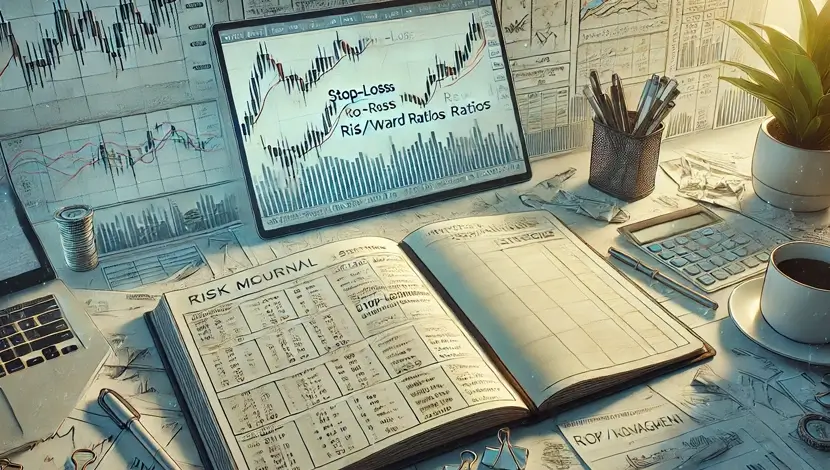
Using Graphs, Charts, or Spreadsheets to Visualize Trade Performance
One of the most powerful ways to analyze your trades is through data visualization. Humans are much better at recognizing patterns and trends in visual data than in raw numbers alone. Utilizing graphs, charts, and spreadsheets allows traders to quickly identify performance trends and make data-driven decisions.
Graphs and Charts: Visual tools like line graphs, bar charts, or pie charts can help traders see trends over time, such as the overall win-loss ratio, the average profit per trade, or the performance of different strategies. For instance, a pie chart that breaks down profits by strategy type can reveal which strategies are performing best.
- Spreadsheets: A well-organized spreadsheet can be used to store all trade data, including performance metrics. For example, Excel or Google Sheets can be set up to track metrics such as trade duration, risk-to-reward ratio, and the win rate for each trade. These platforms also allow you to easily apply formulas to calculate key statistics, like total profits, average returns, and the number of trades per month.
Tools and Platforms for Efficient Journaling
Several tools and platforms are available to help traders efficiently organize and visualize their trade data. Some popular options include:
- TraderSync: An online trading journal designed specifically for active traders. It offers powerful features such as trade analysis, performance tracking, and advanced charting tools.
Edgewonk: A comprehensive trading journal that provides in-depth analytics, including risk management statistics, trade performance reviews, and emotional tracking.
- Google Sheets/Excel: These spreadsheet platforms are highly customizable and can be used to create your trade journal template, allowing for full control over how data is organized and visualized. With built-in formulas and charting tools, they can become powerful tools for tracking performance.
- Evernote/Notion: These are excellent platforms for recording and organizing your thoughts and analysis on individual trades. They’re great for adding subjective notes such as emotional reflections or changes in market conditions.
Using a combination of these tools can provide a robust approach to journaling. The key is to choose a system that fits your needs and allows you to access your trade information easily, while also enabling you to visualize performance for deeper insights.
Mistake 6: Neglecting Risk Management Notes
Risk management is a critical aspect of successful trading, yet many traders make the mistake of neglecting to document their risk management decisions in their trade journals. Whether it’s setting a stop loss, determining position size, or assessing overall market exposure, tracking these decisions is essential for understanding the effectiveness of your strategy and making improvements over time.
Failing to Record Risk Management Decisions
When traders don’t record their risk management decisions, they miss a key component of their trading analysis. Decisions like stop-loss levels, position sizing, and the risk-to-reward ratio are essential for evaluating how well a trade was managed from a risk perspective. Simply noting that a trade was either a win or a loss doesn’t provide enough context to assess whether the risk management strategy played a role in that outcome.
For example, a trade might have been a loss, but if the stop-loss was placed correctly and protected the trader from a larger loss, that decision could be considered successful despite the negative result. Without documenting such decisions, a trader can’t learn from them or refine their strategies for future trades.
Importance of Tracking Risk Management Decisions
Tracking risk management decisions helps traders determine whether their approach is working as intended. By documenting factors like position sizing, risk-to-reward ratio, stop-loss levels, and other risk-related parameters, traders can analyze patterns and assess whether they’re taking on too much risk or not enough. This also helps traders identify whether their overall approach is in alignment with their goals and risk tolerance.
Here are a few key reasons why tracking risk management decisions is vital:
Improves decision-making: By reviewing how past risk management decisions influenced the outcome of a trade, traders can refine their strategies and make better-informed decisions in the future.
Identifies risk exposure: Tracking risk management notes helps traders identify whether they’re overexposed to certain trades or market conditions. For example, if many of your trades involve high-risk settings (e.g., large position sizes or tight stop-loss levels), it may indicate the need for adjustments in your approach.
Provides clarity and consistency: Documenting risk management consistently adds structure to your trading routine, ensuring that every trade is treated with the appropriate level of care and risk consideration.
Helps with emotional control: Keeping track of risk management decisions provides a clear framework for trading. This can help reduce emotional decision-making in the heat of the moment, as the trader has already set boundaries and guidelines before entering the trade.

How to Integrate Risk Management into Your Journaling Routine
Integrating risk management into your journaling routine is straightforward once you’ve established the habit of consistently logging your trades. Here are a few steps to help you get started:
Include Key Risk Management Metrics: Ensure that each trade entry in your journal includes important risk metrics, such as:
- Stop-loss and take-profit levels
- Position size and leverage used
- The risk-to-reward ratio for each trade
- Overall market exposure or capital allocation
Log Adjustments to Risk Parameters: Document any changes to your initial risk management plan during the trade. For example, if you adjust your stop-loss during a trade, note why you made that decision and how it impacted the overall risk.
Review Risk Management After Each Trade: At the end of each trade, take the time to assess whether your risk management decisions were effective. Ask yourself:
- Did my stop-loss save me from a larger loss?
- Was my position size too large for the volatility of the market?
- Did my risk-to-reward ratio align with my trading goals?
Analyze Risk Management Patterns: Over time, you can use your trade journal to analyze trends in your risk management approach. For example, if you find that adjusting your stop-loss level early in a trade leads to better outcomes, you can refine your strategy in the future.
Create Risk Management Templates: To make your journaling more efficient, consider creating a specific section in your trade journal template dedicated to risk management. This will make it easier to record the necessary details each time you trade.
Conclusion:
In this article, we’ve addressed several common mistakes in trade journaling, ranging from lack of detail in trade entries to neglecting risk management notes. These mistakes can significantly hinder your ability to improve and refine your trading strategy. By ensuring your journal is detailed, consistent, and comprehensive, you’ll be able to make better-informed decisions and avoid repeating past errors.
The key to successful trade journaling lies in developing a consistent habit. Record all necessary details after each trade, including entry/exit reasons, market conditions, and your emotional state. Regular review and honest reflection will help you spot patterns and areas for improvement. Remember, the goal is not just to track profits and losses but to analyze your overall trading process, including strategy execution and risk management. With practice, your trade journal will become an essential tool for continuous growth and improvement.
Ready to take your trading to the next level? Start recording your trades with Journalio Trade on AryaMerX today! Our tool makes it easy to track every detail, analyze your performance, and improve your strategy.


