Trading isn’t just about buying low and selling high — it’s about learning, evolving, and making smarter decisions over time. In this journey, a trading journal becomes far more than a simple notebook; it’s your blueprint for understanding your strengths, spotting patterns in your mistakes, and optimizing your strategies.
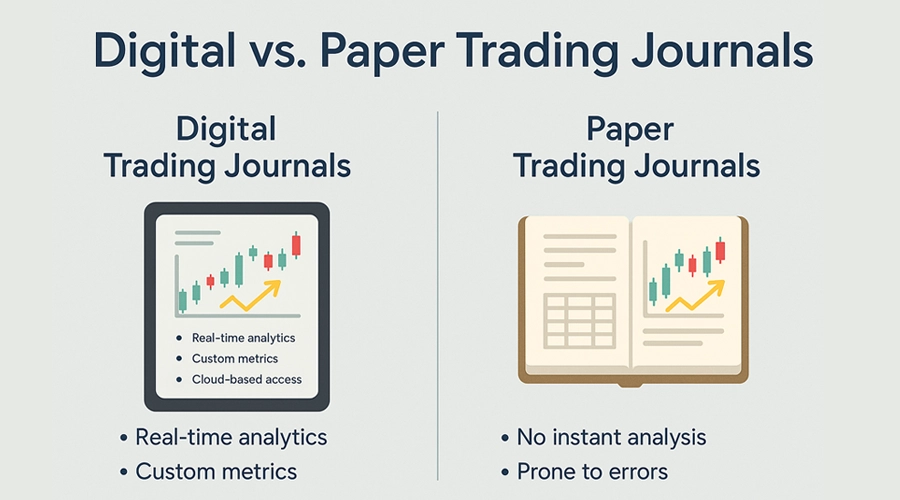
Choosing between a classic paper journal and a digital trading journal isn’t a matter of convenience — it’s a strategic decision that can shape how effectively you grow as a trader. While a paper journal may feel familiar and tactile, a digital trading journal offers dynamic features like real-time analytics, custom metrics tracking, and seamless access across devices — tools modern traders need to stay competitive.
Whether refining your edge (a unique advantage or strategy that sets you apart from other traders) or aiming for long-term consistency, the right medium for your trading journal will significantly impact how well you learn from every trade, every win, and every setback. Your ‘edge’ in trading makes your strategy unique and profitable, and a trading journal can help you refine and maintain this edge.
Trade smarter, not harder. Let ARYAMERX AI Chatbot guide your decisions with real-time insights.
What Is a Trading Journal? (Brief but Deep)
A trading journal is more than a list of past trades — it’s a living, breathing record of your decision-making process. At its core, a trading journal captures what you traded, when and why you made those choices, how you felt then, and what you learned from the outcome.

Every successful trader understands that performance isn’t just about the results; it’s about the thinking and behavior that drive those results. A trading journal helps uncover patterns, emotional triggers, and strategic flaws that often go unnoticed during the heat of trading.
While traditional paper journals offer a basic way to document trades, a digital trading journal elevates this process. It allows traders to track detailed data points, automate calculations, visualize performance trends, and build personalized analytics, transforming trade reviews from a tedious task into a powerful growth engine.
In short, a trading journal is not just about the past; it’s about creating smarter decisions for the future.
Paper Trading Journals: The Classic Approach
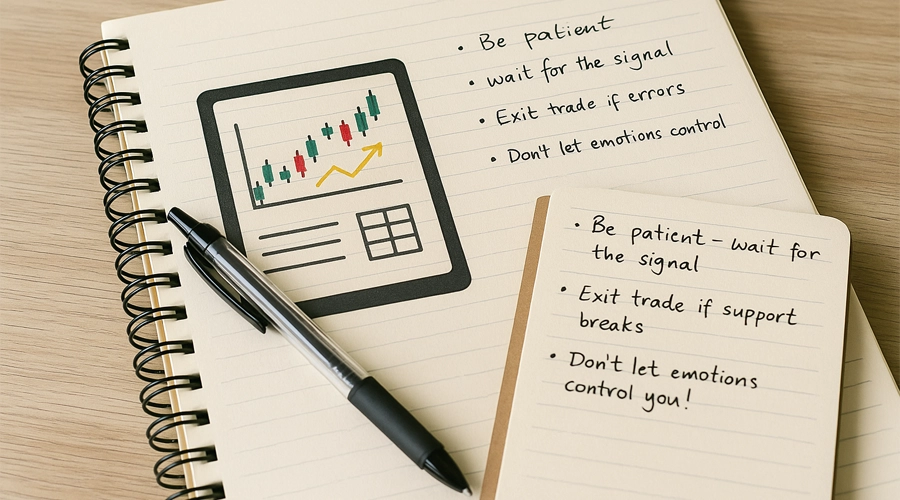
Before technology, traders relied on pen and paper to track their performance. A traditional paper trading journal offers a sense of intimacy and simplicity that many traders still appreciate. There’s something powerful about physically writing down your thoughts, feelings, and trade details — it creates a deeper emotional connection to your decision-making process.
Pros of Paper Trading Journals:
- Emotional Engagement: Handwriting your trades forces you to slow down and reflect, helping you deeply process your emotions.
- Simplicity and Focus: No distractions from notifications or apps — just you, your thoughts, and your trades.
- Customization Freedom: Sketch your charts, add personal notes, or doodle patterns that matter to you.
Cons of Paper Trading Journals:
- Limited Analysis: Paper journals can’t provide automatic statistics, data visualizations, or advanced performance metrics. Every review requires manual work, which can become tedious over time.
- Risk of Loss or Damage: A single spill, fire, or misplaced notebook can wipe out months or years of valuable trading insights.
- Slower Learning Curve: Without the ability to analyze trends and mistakes quickly, traders may miss essential patterns that could accelerate their growth.
While paper trading journals hold a nostalgic charm and foster mindful reflection, they often lack the efficiency and power that a digital trading journal can provide in today’s fast-paced markets.
Digital Trading Journals: The Smart Revolution
Simply recording your trades isn’t enough. You need insights — and you need them fast. That’s where the digital trading journal becomes a game changer, empowering you with instant, actionable intelligence and putting you in the driver’s seat of your trading decisions.
Unlike traditional paper methods, a digital trading journal doesn’t just store your trade history; it transforms your data into actionable intelligence, saving you time and effort. Imagine instantly spotting patterns in your wins and losses, tracking your emotional biases automatically, and monitoring your progress against custom goals — all in one place, making your trading process more efficient and productive.
Key Advantages of Digital Trading Journals:
- Real-Time Analytics: Instantly analyze your trading performance without manual calculations. Get breakdowns of your win rates, risk-to-reward ratios, average profits, and more.
- Custom Metrics Tracking: Set your success indicators, such as managing emotional trades, avoiding FOMO (fear of missing out), or sticking to risk management rules. For instance, you can track the number of times you succumb to FOMO or the percentage of trades where you stick to your risk management rules, and a digital trading journal can help you monitor these metrics over time.
- Cloud-Based Accessibility: Whether trading at your desk or reviewing your week on the go, a digital trading journal offers seamless access across multiple devices.
- Auto-Import from Trading Platforms: Forget manual entry. Some journals sync directly with your broker or trading platform, pulling your trades automatically and saving you hours.
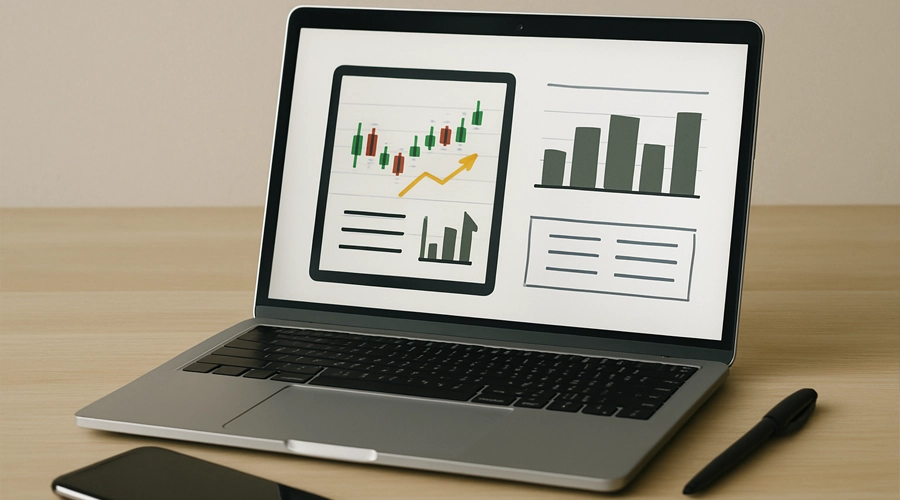
- Advanced Data Visualization: Visualize your strengths and weaknesses clearly and quickly, from heatmaps to performance graphs.
Challenges to Consider:
- Data Security: Protecting your trading data is essential with any online tool. Always choose platforms with strong encryption and security protocols.
- Tech Dependence: A digital trading journal requires reliable internet access and device functionality, meaning it’s less “offline friendly” than a notebook.
Despite these small challenges, the benefits of a digital trading journal far outweigh the old-school methods. They offer a more innovative, faster, and tailored approach to mastering the markets.
Don’t just record your trades — learn from them. Join Journalio and transform your trading with the smartest digital trading journal.
Key Features and Entities to Look for in a Digital Trading Journal
Not all digital trading journals are created equal. Choosing the right one can mean the difference between surface-level note-taking and profound, transformative insights that inspire and motivate you to level up your trading and reach new heights in your trading journey.
Here’s what you should look for when selecting an influential digital trading journal:
- Tagging System for Categorization
- The ability to tag trades by setup type, strategy, emotional state, or market condition allows for easier pattern recognition and more focused reviews.
- Customizable Dashboards
- A great digital trading journal lets you create your dashboards. Whether you want to track win rates over specific strategies, monitor psychological triggers, or visualize average hold times, customization makes your journal work for you.
- Error Analysis Tools
- Look for a system that automatically flags and categorizes mistakes. Knowing whether you consistently break a specific rule can be the fastest fix.
- Goal Tracking and Habit Monitoring
- Beyond trades themselves, an elite digital trading journal tracks your trading goals and daily habits. Consistency isn’t built overnight; seeing your progress in discipline, patience, or risk management keeps you accountable.
- Data Visualization Capabilities
- Graphs, heatmaps, bar charts — the more visually you can see your strengths and weaknesses, the faster you learn. A journal that converts raw data into easy-to-understand visuals is a must-have.
- Integration with Trading Platforms
- Automatic syncing with your broker or trading platform saves time and reduces the chance of human error when logging trades manually.
- Strong Data Security and Cloud Backup
- Since you’re storing sensitive financial data, your digital trading journal should prioritize encryption, secure servers, and cloud backups to ensure nothing gets lost.
By focusing on these features, you’ll ensure that your digital trading journal isn’t just another tool — it becomes an essential partner in your journey toward smarter, more consistent trading.
Markets move fast. With Master the Market, you’ll move faster and smarter.
Which One Is Right for You? (Personalized Advice)
Choosing between a paper and a digital trading journal isn’t just about picking a tool — it’s about aligning your journaling method with your trading personality and growth goals.
Here’s a quick way to figure out what fits you best:
You Might Prefer a Paper Trading Journal If:
- You enjoy physically writing things down and feel more connected through pen and paper.
- You find that slowing down to handwrite helps you reflect better.
- You value simplicity and don’t want to rely on devices or internet access.
Paper journals are often a good fit for traders who are more tactile, introspective, and prefer a “disconnect to reflect” approach.
You’ll Probably Thrive with a Digital Trading Journal If:
- You want instant insights and visual performance analysis without manual number-crunching.
- You like setting and tracking specific trading goals and habits over time.
- You prefer flexibility — accessing your trading journal from multiple devices, anywhere, anytime.
- You want to save time by automatically importing your trades and generating reports.
A digital trading journal is ideal for growth-oriented traders who see journaling as an active tool for continuous improvement, not just a record-keeping habit.
Pro Tip:
Many traders start with paper to build the journaling habit, then upgrade to a digital trading journal once they realize the power of data-driven learning.
Ultimately, the best journal is the one you’ll use consistently, because consistent review leads to consistent improvement.
Final Verdict: Why Digital Trading Journals Are the Future
How we trade has evolved — and so should how we learn from our trades.
While paper trading journals still hold sentimental and reflective value, they often fall short regarding speed, analysis, and growth optimization. In today’s dynamic markets, insights need to be quick, data needs to be actionable, and tracking your performance needs to be effortless.
A digital trading journal offers precisely that. With real-time analytics, custom metrics, visual performance breakdowns, and cloud-based accessibility, it empowers traders to learn faster, adapt smarter, and build habits that drive consistent success.
A digital trading journal isn’t optional if you’re serious about elevating your trading game — not just recording your past, but actively shaping your future. It’s essential.
Start small, stay consistent, and let your digital trading journal become your most powerful edge in the market.
Unlock your trading potential with ARYAMERX — expert tools, smart insights, and all the support you need to grow.


