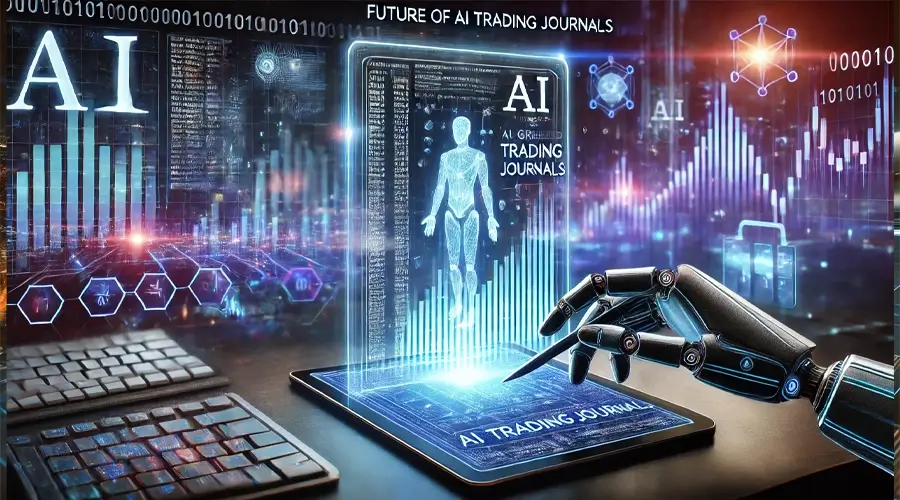
There was a time when trade journals were nothing more than Excel sheets, cluttered notebooks, or half-hearted digital logs buried deep in someone’s cloud. Traders manually recorded entries, hoping to find patterns, correct mistakes, and track progress. But let’s be honest—most of those journals were abandoned faster than a losing trade. Traditional trading documentation simply can’t keep up in today’s ultra-dynamic markets, where milliseconds matter and decisions hinge on logic and emotion. That’s where AI-powered trade journals come in—not as fancy upgrades but as an evolutionary leap. These intelligent systems don’t just log your trades—they analyze your behavior, interpret your emotions, detect patterns you can’t see, and even give you personalized feedback. It’s no longer about recording but learning, adapting, and growing in real time.
Why Traditional Trade Journals Are Failing Traders Today
Let’s face it—most traditional trade journals are glorified diaries, not diagnostic tools. You write down the entry and exit points, maybe a few notes about market conditions, and that’s it. But trading isn’t just numbers and charts. It’s emotions, impulses, hesitation, overconfidence—all the messy human stuff rarely captured in a spreadsheet. Traditional journals fail because they’re blind to the psychological layer of trading, which, ironically, is often the most crucial.
They’re also painfully manual. Logging every trade, writing reflections, organizing data—it’s time-consuming. And when life gets busy (which it always does), the habit breaks. Days turn into weeks, the journal gets dusty, and suddenly you’re trading blind again.
Then comes the most frustrating part: “I don’t know what I’m doing wrong.” That’s the sentence traders say when their journal exists, but it doesn’t help. Static notes don’t connect the dots; they don’t surface behavioral patterns, show emotional triggers, or highlight decision flaws over time. You’re left guessing, and guessing is expensive in trading.
Traditional trade journals aren’t broken because they lack features but because they lack intelligence. In a world where every edge matters, relying on memory and manual notes no longer cuts it.
“Looking to level up your trading game? Journalio by ARYAMERX helps you analyze, reflect, and refine every move you make.”
How AI Is Changing the Game
Trading journals used to be reactive—you wrote something after the damage was done.
Now, AI-powered trade journals are becoming proactive companions that analyze, warn, and even coach you in real time.
What Makes These Smart Journals So Powerful?
Emotional Intelligence (Yes, Really)
Modern journals can interpret the tone of your notes, voice inputs, or even chat-like interactions using NLP and sentiment analysis.
They detect:
- Rising anxiety in your logs
- Overconfidence creeping in
- Patterns of revenge trading
You might not realize it, but your journal does.
Pattern Recognition on Autopilot
AI doesn’t just look at your trades—it learns from thousands of similar trading behaviors across the system.
It can:
- Compare your win/loss cycles
- Highlight recurring mistakes
- Suggest when your strategy is slipping.
And it does this without you needing to crunch any numbers.
Hyper-Personalized Feedback
No more generic advice like “stick to your plan.”
AI journals say things like:
“You’re more likely to take impulsive trades after two losses. Step away after your second red.”
It’s like having a coach who knows your exact trading DNA.
A Day in the Life: Trading with an AI Journal
8:30 AM – You open your terminal. The journal reminds you:
“Yesterday, you entered two trades outside your strategy zone at this hour. Let’s avoid that today.”
10:45 AM – A winning trade hits TP. You’re hyped.
The AI picks up on this and nudges you:
“Emotional spike detected. Take a break before your next trade.”
12:15 PM – You’re eyeing a setup that barely fits your plan.
The journal flashes:
“Last time you took a similar setup, you lost 3R. Still want to proceed?”
4:30 PM – Trading session ends. Your journal has already:
- Logged all trades with screenshots
- Analyzed entry quality
- Summarized key takeaways
- Suggested one minor tweak to your position sizing strategy
This isn’t science fiction—it’s already happening.
And as these systems get more intelligent, they won’t just log what you did.
They’ll teach you how to do it better.
Ready to level up? The AI’s already watching—in the best possible way.
“Ready to truly understand the market and trade like a pro?
Master the Market by ARYAMERX paves your path to trading mastery.”
The Future of Trading Documentation: Not Just Logs, but Learning Systems
The next generation of AI-powered trade journals isn’t just smarter—it’s transformational.
We’re moving from “journals that record” to “systems that learn, adapt, and coach.”
This shift is redefining the very meaning of trading documentation.
From Static Logs → Dynamic Mentors
Old journals = “Here’s what you did.”
New systems = “Here’s why you did it, what it cost you, and how to fix it.”
We’re talking about platforms that:
- Track your performance across strategies, assets, and timeframes
- Map your psychological triggers using historical data and emotional patterns.
- Offer tailored lessons based on your behavior and trading personality.y
These are not just note-taking tools anymore.
They’re becoming interactive feedback loops—a mirror to your trading mind.
Total Integration with Your Trading Ecosystem
The future of trading journals lies in seamless integration.
Live Sync with Broker APIs
Your trades are auto-logged with all the relevant metadata—entry time, lot size, P&L, and even market conditions at the time of execution.
Real-Time Alerts Based on Behavior
Took three trades in five minutes?
The system knows that’s your “overtrading zone” and can pause you with a smart alert.
Cross-Platform Intelligence
From your desktop platform to your mobile app, from trading bots to Discord channels—your journal stays connected and constantly learning.
Blending Data with Psychology
What makes this evolution genuinely groundbreaking is the addition of behavioral analytics:
- Time of day when you’re most likely to break your rules
- Correlation between sleep quality (yes, synced from wearables) and trade performance
- Impact of news events on your emotional stability
These journals don’t just know your trades. They start to know you.
So, What Does the Future of Trading Journals Look Like?
- Journals that talk back
- Personalized weekly reports with suggestions
- Visual dashboards of emotional and strategic risk
- Learning modules triggered by your latest mistakes
- Eventually, AI that evolves with you, like a mentor who never sleeps
Bottom line?
Tomorrow’s journal is not your assistant.
Your partner is constantly watching, learning, and nudging you toward that elusive edge.
And in this game, that edge is everything.
Risks, Biases and Human Element: The Limits of AI in Trading Journals
It’s easy to get excited about the promise of AI-powered trade journals. They’re fast, smart, and seemingly objective. But just because a tool is advanced doesn’t mean it’s infallible. One of the most common traps traders fall into is overtrusting their tech.
So here’s the uncomfortable truth:
AI can help you trade better but also lead you astray.
Should You Trust AI 100%? Not.
AI is only as good as the data it’s trained on.
If that data is:
- too narrow
- lacks diversity in trading styles
- or is based on outdated market behavior,
Then your journal might make harmful recommendations with complete confidence.
Imagine a trader who uses price action in crypto markets trying to follow suggestions built on forex scalping patterns.
That’s like wearing someone else’s glasses—you’ll see something, but it won’t be clear.

The Real Dangers of Blind Automation
While AI brings efficiency, there are real risks when traders stop thinking critically:
- Algorithmic Bias
If the journal assumes all revenge trades are bad, it may flag your high-conviction setups as emotional mistakes.
- Oversimplified Metrics
AI might rank trades only based on win/loss, ignoring context like the R: R ratio, volatility, or risk exposure.
- Over Personalization Loops
Your journal might adapt too closely to your past behavior, reinforcing bad habits instead of breaking them.
If you’re always hesitating, it might start encouraging more hesitation. That’s how subtle it gets.
The Human Element Is Not Optional—it’s Vital
AI doesn’t trade for a living. You do.
No matter how advanced your journal becomes, it will never have your instinct, experience, or intuition.
Why this matters:
- Your gut knows when a chart looks “off,” even if the journal says it’s a textbook setup.
- Your awareness of macro events might override a data-driven recommendation.
- Your strategy evolution isn’t always logical—it’s experimental, creative, emotional.
These are things AI can’t fully grasp. And frankly, maybe it shouldn’t.
The Smart Approach: Human + Machine = Edge
The future of journaling isn’t about replacing the trader.
It’s about amplifying them.
Here’s how you strike that balance:
- Use AI for what it’s great at: pattern recognition, objective feedback, psychological tracking
- Use your brain for what it’s great at: strategic adaptation, creative thinking, discretionary calls
- Use your journal as a partner, not a dictator.
When these two forces work together, that’s where the magic happens.
Not in the algorithm. Not in the intuition. But in the integration of both.
Final takeaway for smart traders:
“You don’t need an AI that tells you what to do.
You need one that helps you think better about what you’re already doing.”
That’s the actual value of intelligent journaling. And if you don’t keep your humanity in the loop,
Even the world’s smartest journal can become your system’s weakest link.
“Got a trading question? Let our AI Chatbot at ARYAMERX guide you with instant, smart answers—anytime you need.”
Final Thoughts: It’s Not About the Tool, It’s About the Edge
In the race to become a better trader, searching for the perfect tool is tempting—something that will finally “fix” your mistakes, reveal the holy grail setup, or automate your success. But let’s get real: there is no magic bullet.
AI-powered trade journals are brilliant. They’re fast, analytical, insightful. But they are not your savior.
They’re not there to trade for you.
They’re there to accelerate your growth—if you’re willing to do the work.

The Edge Isn’t in the Journal. It’s in You Using the Journal Right.
The future of trading documentation is not about writing better notes.
It’s about creating smarter feedback loops between you and your process.
You bring the vision, the instinct, the grit.
AI brings the memory, the logic, the relentless pattern-checking.
Together, they form something stronger than either one alone.
The trader’s edge of the future isn’t just technical or psychological—
it’s cognitive collaboration with intelligent systems.
So ask yourself:
- Are you treating your journal like a therapist, or just a to-do list?
- Are you learning from your trades, or just logging them?
- Are you building a system that evolves with you—or one you’ll abandon like the last ten?
Because here’s the real question:
“How is your journal going to shape your future as a trader?”
Not just next week.
Not just next quarter.
But next level.
Final word?
Use the AI.
But never forget: you are the alpha.


