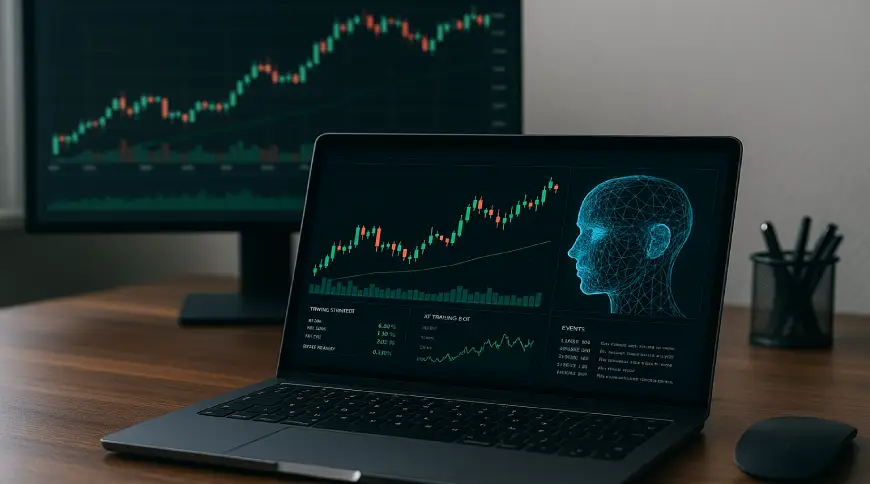
In today’s fast-paced markets, traders are no longer asking if technology will shape the future of investing, but how. One of the most exciting shifts is automated trading with AI—a system where algorithms don’t just follow static rules, but actually learn, adapt, and evolve with the market.
Still, a big question hangs in the air: Will AI replace human traders, or will it serve as a powerful partner? This concern is especially real for younger traders who want efficiency but also fear losing control to a machine.
This article dives into the future of AI-powered trading bots, exploring not only the advantages—like speed, scalability, and pattern recognition—but also the risks and hidden challenges. By the end, you’ll see that the real potential of automated trading with AI isn’t about replacing human intuition, but amplifying it.
What is Automated Trading with AI?
At its core, automated trading with AI is the next evolution of algorithmic trading—only smarter. Instead of relying on rigid, pre-programmed rules (“buy when X crosses Y”), AI-driven systems are designed to learn from data, adapt to changing market conditions, and even uncover hidden patterns that human eyes would miss.
For a digital-first generation that grew up with Spotify recommending the next song and Netflix predicting the next show, the idea isn’t foreign: machines that learn your behavior and make better suggestions over time. Now imagine the same intelligence applied to trading. That’s where AI-powered trading systems come in.
Traditional trading algorithms operate like a set of traffic lights—fixed, rule-based, predictable. By contrast, AI bots behave more like GPS navigation with real-time traffic updates: they adjust routes, anticipate roadblocks, and find new opportunities as conditions change.
The magic happens through a combination of technologies:
- Machine Learning (ML) enables trading bots to recognize trends and improve their decisions as they process more data.
- Deep Learning (DL): Uses neural networks to identify complex patterns, correlations, and anomalies that simple models would miss.
- Predictive Analytics: Forecasts potential market movements by analyzing historical data, news sentiment, and alternative datasets such as social media buzz.
In short, automated trading with AI transforms trading from a static playbook into a dynamic, adaptive process—one that feels more alive, reactive, and forward-looking.
Why Traders Are Turning to AI-Powered Bots
The markets move fast—so fast that relying on instincts or staring at charts all day just doesn’t cut it anymore. That’s why more and more traders are leaning into AI-powered trading bots, tools designed to handle the complexity and speed of modern markets. Here’s why:
- Reduced Decision Fatigue
Trading used to mean endless hours of second-guessing: Should I enter now? What if I wait? Am I missing something? With automated trading with AI, that weight is lifted. Bots don’t rely on “gut feelings.” Instead, they follow data-driven strategies that eliminate hesitation and overthinking. - Lightning-Fast Execution
In trading, milliseconds can mean the difference between a win and a loss. Human reflexes just can’t compete. AI bots can scan thousands of data points, process signals, and execute trades in microseconds—capitalizing on opportunities the moment they appear. - Pattern Recognition Beyond Human Limits
While a human trader might spot a trend on a daily chart, AI-powered systems can recognize subtle correlations across multiple markets and timeframes simultaneously. This level of pattern recognition enables the identification of opportunities and risks that would otherwise go unnoticed. - Better Risk Management, Less Emotion
One of the biggest pitfalls for traders is emotion—fear of missing out, panic selling, or chasing losses. AI trading bots don’t feel greed or fear. They stick to the rules, manage stop-losses precisely, and adjust positions logically. For traders, this means more consistent outcomes and fewer “what was I thinking?” moments.
In short, traders are turning to AI-powered bots not because they want to trade less, but because they want to trade smarter—using tools that expand their vision, speed up decisions, and keep emotions out of the equation.
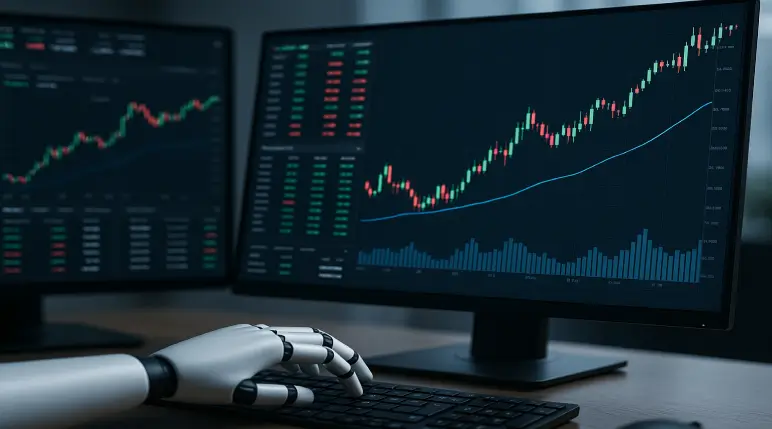
Core Benefits of Automated Trading with AI
What makes automated trading with AI more than just a flashy buzzword is the set of practical advantages it brings to both new and experienced traders. Instead of adding complexity, AI strips away the noise and focuses on what actually drives better results.
- Data-Driven Decisions
No more letting hype, rumors, or late-night impulses dictate your trades. AI trading bots rely on pure data—analyzing price action, volume, sentiment, and even alternative datasets—to make decisions that are grounded in facts, not feelings. For traders, this means consistency and fewer emotional slip-ups. - 24/7 Market Monitoring
Global markets never sleep, but humans do. With AI-powered systems, you don’t have to be glued to the screen at 3 a.m. These bots run nonstop, scanning for opportunities and executing trades while you live your life. You wake up, and the market has already been working for you. - Backtesting & Optimization
One of the strongest features of AI trading bots is the ability to test strategies before committing real money. By running historical simulations, traders can fine-tune their setups, avoid costly mistakes, and enter the market with confidence. Continuous optimization also means the bot evolves as market conditions shift. - Scalability Across Markets
Managing one or two assets manually is hard enough. But with automated trading with AI, scalability becomes simple. Bots can track multiple markets, timeframes, and asset classes at once—whether it’s stocks, forex, or crypto—without missing a beat.
Together, these benefits turn AI-powered trading systems into more than just a convenience; they’re becoming an edge. The traders who leverage them aren’t just keeping up—they’re setting the pace.
Real-World Use Cases
While the concept of automated trading with AI sounds futuristic, it’s already reshaping how different types of traders operate today. From solo retail traders to massive hedge funds, AI-powered systems are proving their worth in distinct ways:
- Day Traders: Speed and Precision
For day traders, timing is everything. Missing an entry by even a few seconds can turn a winning trade into a losing one. AI trading bots give them the edge by scanning markets in real time and executing trades instantly. Instead of juggling dozens of charts, day traders can let the bot handle rapid-fire decisions while they focus on refining overall strategy. - Swing Traders: Pattern Recognition at Scale
Swing traders often hold positions for days or weeks, searching for mid-term patterns that signal potential reversals or breakouts. With AI-powered trading systems, these traders can analyze thousands of data points across multiple timeframes, uncovering patterns far more complex than a human could reliably spot. This helps them enter trades with higher confidence and manage positions more effectively. - Institutions & Hedge Funds: Massive Data, Massive Trades
On the institutional side, AI trading bots are already deeply integrated into hedge funds and proprietary trading firms. These entities deal with millions (sometimes billions) in capital, requiring systems that can process vast volumes of data at lightning speed. AI enables them to identify micro-opportunities, rebalance portfolios in real time, and execute high-frequency trades with precision no human team could match.
Across all these groups, the common thread is clear: automated trading with AI doesn’t just save time—it fundamentally transforms how traders interact with the market, giving each one an edge tailored to their style and scale.

Potential Pitfalls & Risks
As powerful as automated trading with AI can be, it’s not a magic button for guaranteed profits. Like any tool, it comes with risks—and understanding them is crucial before putting your capital on the line.
- Overfitting AI Models
One of the biggest dangers in AI-driven trading is overfitting—when a model performs brilliantly on historical data but collapses in live markets. It’s like teaching a student to ace one exam by memorizing the answers instead of actually learning the subject. The model looks “smart,” but in reality, it’s fragile. - Data Quality Issues: Garbage In, Garbage Out
AI is only as good as the information you feed it. If the input data is biased, incomplete, or low-quality, the outputs will be unreliable. This principle—“garbage in, garbage out”—is especially dangerous in trading, where insufficient data can lead to disastrous financial decisions. - Over-Reliance on Algorithms
Traders can fall into the trap of trusting the bot unquestioningly. While AI trading bots are powerful, markets are influenced by unpredictable human factors—geopolitical events, sudden regulations, or emotional crowd behavior—that no algorithm can fully anticipate. A hands-off approach may feel convenient, but it can leave traders exposed when conditions shift unexpectedly. - Risk of Market Manipulation
AI systems act fast, but that speed can also backfire. In volatile markets, bots may misinterpret sudden price spikes or manipulation tactics as genuine signals. This can trigger a cascade of wrong trades, amplifying losses instead of preventing them.
In short, automated trading with AI is not a “set it and forget it” solution. It demands oversight, innovative data practices, and a balance between automation and human judgment. Ignoring these risks is like giving your car autopilot and then falling asleep at the wheel—sooner or later, you’ll crash.
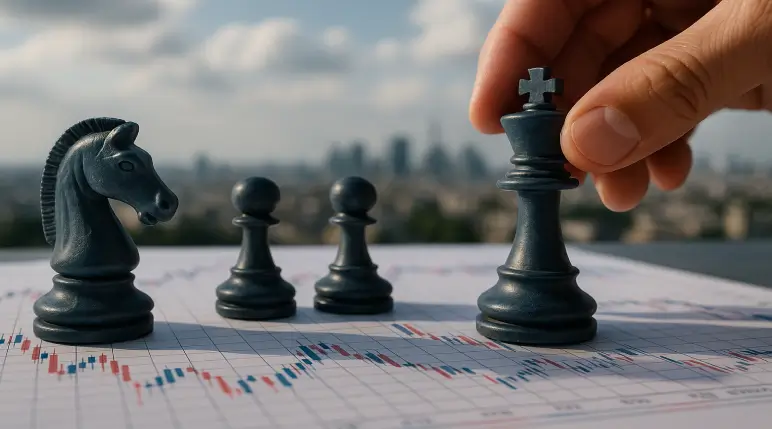
Future of Trading: Human + AI Collaboration
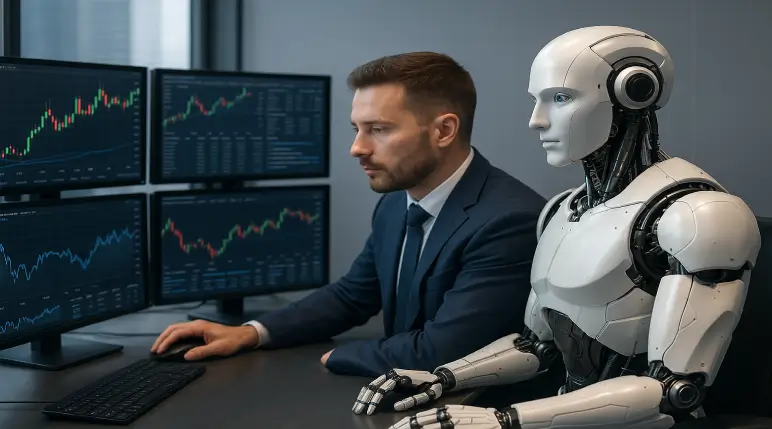
The future of trading isn’t about machines taking over and pushing humans out of the equation—it’s about building more innovative partnerships. Automated trading with AI is powerful, but it doesn’t eliminate the need for human judgment, creativity, and context. Instead, it amplifies them.
Think of it as augmented trading: a synergy where the trader and the bot work together. The AI-powered system takes care of scanning massive datasets, spotting patterns, and executing trades with precision. At the same time, the human provides strategic direction, adapts to unexpected news, and understands the bigger picture. It’s the blend of cold, data-driven logic with human intuition that creates the real edge.
Looking ahead, automated trading with AI is set to become the industry standard. Just as online trading platforms once revolutionized the way people interacted with markets, AI-driven bots will soon be a baseline tool every serious trader uses. The difference between successful traders and the rest won’t be about whether they use AI, but how effectively they integrate it into their workflow.
The takeaway? The future of trading isn’t human or AI—it’s human plus AI. The winners will be those who learn to collaborate with their bots, treating them not as replacements, but as powerful teammates.
How to Get Started with AI-Powered Trading Bots (Practical Tips)
Diving into automated trading with AI can feel intimidating, but starting bright makes all the difference. Here are some practical steps to set yourself up for success:
- Choose the Right Platform or Tool
Not all AI trading bots are created equal. Some are designed for crypto, others for stocks or forex. Look for platforms with transparency, solid track records, and customization options. Avoid “black box” tools that promise guaranteed profits without showing you how they actually work. - Pair AI with Analytical Knowledge
AI is powerful, but it’s not a replacement for understanding the markets. Having a foundation in technical and fundamental analysis helps you evaluate whether the bot’s decisions make sense. Think of the bot as a co-pilot—you still need to know how to fly the plane. - Start Small and Scale Gradually
Don’t throw your entire portfolio into automation right away. Begin with a small amount of capital, test strategies, and observe how the bot performs under real market conditions. As you gain trust and see consistent results, scale up step by step. - Balance Automation with Human Oversight
The most effective traders treat AI-powered bots as assistants, not replacements. Keep a watchful eye on performance, step in during unusual market events, and regularly update strategies. This balance ensures you get the efficiency of automation without losing human intuition.
Getting started with automated trading with AI isn’t about rushing in—it’s about building a system where automation handles the heavy lifting, while you stay in charge of the strategy. Start small, stay informed, and let the collaboration between humans and AI grow naturally.
Conclusion
In this article, we explored how automated trading with AI is reshaping the financial markets—transforming trading from a manual, emotion-driven process into a more innovative, data-powered partnership between humans and machines. From day traders seeking speed to institutions managing billions, AI-powered bots are proving their value through pattern recognition, 24/7 monitoring, backtesting, and scalability.
Yet, the journey isn’t without risks. Overfitting, poor data quality, blind reliance on algorithms, and the potential for market missteps all highlight the need for balance. The real edge comes not from handing complete control to machines, but from embracing augmented trading—where human intuition and AI intelligence work side by side.
The future is clear: automated trading with AI will become a standard, not a luxury. The traders who thrive won’t be the ones who fear AI, but those who learn to collaborate with it—using bots to extend their reach, sharpen their strategies, and free themselves from emotional pitfalls.
At the end of the day, AI isn’t here to replace traders—it’s here to help them trade like the best version of themselves.


