
The financial markets are no longer just battlegrounds of bulls and bears—they’re now arenas where algorithms and human intuition compete, collaborate, and occasionally clash. Welcome to the age of AI-powered trading, where artificial intelligence doesn’t just assist, it analyzes, predicts, and even learns from its own mistakes.
But here’s the real challenge for today’s trader: How do you embrace AI without losing your edge as a thinking human?
Because let’s face it—technical indicators can be noisy, fundamental data can be delayed, and the emotional rollercoaster of the markets can make even seasoned traders second-guess their moves. Add AI into this mix, and suddenly you’re flooded with predictions, models, and pattern recognition… but no roadmap for how to blend it all.
This is where a new approach emerges: combining AI with technical and fundamental analysis. Not as a replacement for your current tools, but as an amplifier—a second brain that doesn’t sleep, doesn’t panic, and doesn’t miss a thing.
In this article, we’ll explore how traders like you—whether you’re a swing trader, a data geek, or someone just tired of contradictory signals—can start integrating AI insights into traditional methods to build a more complete, adaptive, and profitable strategy.
Because the future isn’t just AI-driven, it’s human-informed and AI-enhanced.
Why Relying on Just One Method Isn’t Enough
Relying solely on a single trading approach—be it technical analysis or fundamental analysis—is like trying to navigate a complex city with just one road sign. It might get you somewhere, but chances are, you’ll miss turns, get lost, or end up exactly where everyone else is stuck.
The Problem with Technical Analysis
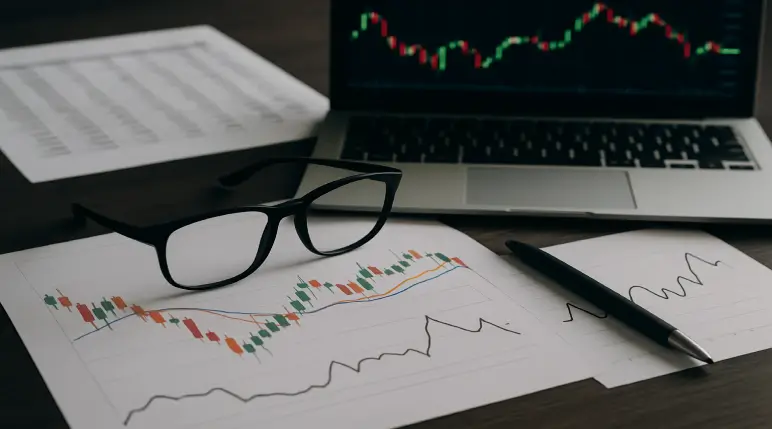
Technical indicators, while incredibly popular, are often lagging. They show you where the market has been—not necessarily where it’s going. Sure, patterns like head and shoulders or MACD crossovers have their place, but they can be noisy, especially in volatile or manipulated markets. Traders who rely only on charts may end up chasing ghosts—patterns that looked promising but were never backed by real-world momentum or sentiment.
The Limitations of Fundamental Analysis
On the flip side, fundamental analysis offers a deeper look into a company or asset’s intrinsic value. But it comes with its own set of blind spots. Data overload, delays in market reaction, and the increasing complexity of macroeconomic factors can make it hard to translate fundamental insights into timely trading decisions. Sometimes the market simply doesn’t care about fundamentals—at least not right away.
Why You Need a 360° Market Perspective
Markets today are too fast, too interconnected, and too emotional to be understood through a single lens. A chart won’t tell you how a regulatory headline is about to tank your stock. A quarterly report won’t warn you about a sudden shift in social sentiment.
That’s why modern traders are moving toward a 360-degree approach—combining AI with technical and fundamental analysis. This hybrid model allows you to zoom out and see the bigger picture, while also drilling into micro-patterns and real-time reactions. It’s not about abandoning old tools—it’s about upgrading your entire toolkit.
What AI Really Brings to the Table
AI isn’t just a fancy buzzword—it’s a game-changer in how we analyze the markets. At its core, combining AI with technical and fundamental analysis means adding a level of speed, depth, and pattern recognition that humans simply can’t match.
Learning Beyond the Charts
Through machine learning algorithms, AI systems can process massive volumes of data—from price action and volume trends to real-time sentiment analysis on social media or news feeds. This goes way beyond spotting a simple RSI divergence or trendline break. AI doesn’t just look at one chart—it consumes thousands, compares patterns, weighs probabilities, and adapts as new data flows in.
Detecting What You Miss
One of AI’s greatest strengths is recognizing complex patterns that humans might overlook—especially when emotions or cognitive bias cloud our judgment. For example:
- 📉 Spotting subtle divergences between price and volume that don’t show up in standard indicators
- 📰 Analyzing the impact of breaking news within seconds and adjusting sentiment scores in real time
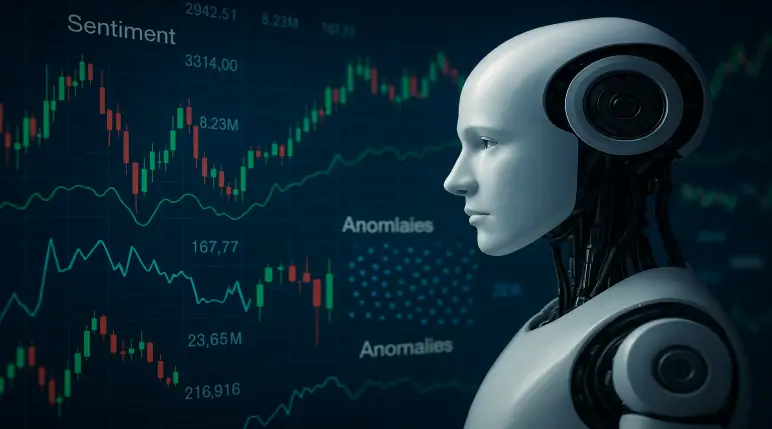
- 🔍 Identifying anomalies in financial data—outliers, unusual volume spikes, or irregular price behavior—before they become apparent to others
In other words, AI acts as your tireless co-pilot. While you’re analyzing one setup, it’s scanning hundreds. While you’re catching up on yesterday’s earnings report, it’s already gauging market reactions across global exchanges.
And the best part? AI doesn’t get tired. It doesn’t panic. It doesn’t chase losses. It simply observes, learns, and refines.
This is what makes AI-enhanced trading so powerful—not because it replaces the trader, but because it gives you superhuman visibility into the ever-evolving behavior of the market.
Blending Perspectives: AI + Technical + Fundamental
It’s one thing to talk about combining AI with technical and fundamental analysis—it’s another, actually, to apply it in real-world trading. Let’s break down how a modern trader can integrate all three perspectives to make smarter, more confident decisions.
A Practical Scenario: The Triple-Lens Trader
Imagine a trader analyzing a mid-cap stock or a promising altcoin. Instead of relying solely on technical indicators or a quarterly report, here’s how they might blend AI-driven insights, technical setups, and fundamental signals into one powerful strategy:
- Start with AI-powered screening
Using AI-driven tools, the trader scans hundreds of assets to identify potential setups. These tools analyze price action, volume spikes, and sentiment shifts, flagging assets where technical patterns are forming—such as potential breakouts or hidden divergences. - Overlay technical analysis
With a shortlist in hand, the trader applies their own technical lens. They draw trendlines, examine support and resistance, and check indicators like RSI or MACD. The AI’s recommendations help reduce noise and narrow focus to setups with high statistical backing. - Validate with fundamentals
Before entering a trade, the trader checks key fundamental factors. Is there recent news that might affect the price? Any upcoming earnings or announcements? What’s the macroeconomic backdrop? AI tools may also provide real-time news sentiment analysis, helping the trader understand how the market is reacting emotionally to these events. - Backtest and confirm
Finally, historical data is used to confirm the reliability of the setup. AI can simulate similar past market conditions to estimate how this kind of setup has behaved before, giving the trader additional confidence based on data, not just gut feeling.
A Real Example
Let’s say you’re considering a trade on a renewable energy stock. Here’s how the triple-blend might play out:
- AI detects an unusual increase in volume and flags a bullish divergence forming over the last three days.
- Your technical analysis confirms a breakout above a key resistance level with strong momentum.
- Meanwhile, fundamental data indicate that a new government subsidy policy has been announced, with positive sentiment flooding across financial news and social platforms.
Three lenses. One decision. More clarity.
This holistic strategy doesn’t just improve entry and exit points—it enhances risk management, helps avoid false signals, and builds a robust foundation for long-term success in volatile markets.
When you combine AI with technical and fundamental analysis, you’re not just trading—you’re operating with a richer, sharper view of the market than most others on the playing field.
Real-Life Use Cases
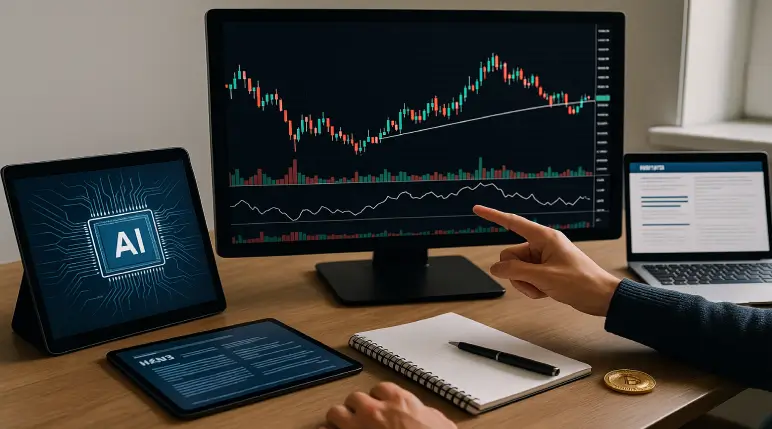
The idea of combining AI with technical and fundamental analysis isn’t just theoretical—it’s already being used by professional traders, hedge funds, and even retail investors who want to stay ahead of the curve. Let’s look at how this integrated approach works in real trading environments and what tools are helping traders bridge the gap.
How Pro Traders Blend All Three
Many professional traders no longer treat AI as a “bonus tool” or a gimmick. They treat it as an essential part of their decision-making workflow. Here’s how they typically operate:
- Step 1: AI as the First Filter
Traders start with AI-driven scanners that sift through thousands of assets in real time—highlighting those with unusual technical behavior, spikes in sentiment, or sudden news impact. This drastically cuts down research time and eliminates emotional bias from early-stage screening. - Step 2: Manual Technical Validation
Once assets are shortlisted, traders apply their personal strategies using charts, indicators, and price structure. This is where human pattern recognition and experience come into play—often catching nuances the algorithm might miss. - Step 3: Fundamental Cross-Check
Before committing capital, they check the fundamental narrative: earnings reports, macroeconomic events, insider activity, or sector trends. Many now use AI-based news aggregators or sentiment analyzers to assess whether the fundamentals align with the technical picture quickly.
This trio of analyses helps traders build conviction-backed trades—ones that are statistically supported, technically sound, and fundamentally justified.
Tools That Deliver All Three Perspectives
You don’t need to be a hedge fund to use this kind of triple-analysis framework. Several AI-enhanced trading platforms now offer features that combine all three perspectives in a single interface:
- 🔹 Trade Ideas – Uses AI (named “Holly”) to generate real-time trade ideas based on technical patterns, and then validates them using historical data and backtesting.
- 🔹 Kavout – Offers a “K Score” for stocks, blending machine learning with fundamental signals, earnings data, and price momentum.
- 🔹 Tickeron – A marketplace of AI tools that includes pattern recognition, fundamental screeners, and trend forecasts.
- 🔹 Sentiment Investor – Tracks sentiment from news and social media and correlates it with technical indicators and earnings data.
- 🔹 MetaStock with Xenith – Combines deep fundamental datasets with technical analysis tools and forecasting modules powered by AI.
These platforms are reshaping the way modern traders work—giving them one dashboard instead of five, and turning fragmented analysis into unified, actionable insight.
Challenges and Human Touch
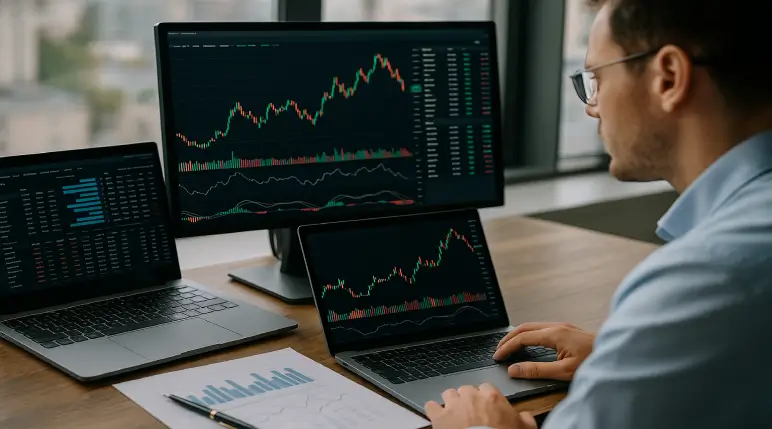
As powerful as it is, AI is not a crystal ball. It can detect patterns, crunch numbers, and process vast amounts of data in seconds—but it doesn’t understand the market the way a human does. And that’s where the real challenge lies.
Can You Trust AI Signals Blindly?
The short answer? No.
While AI-generated signals can be incredibly accurate, they’re only as good as the data they’re trained on. If that data is flawed, outdated, or biased, the outcome can be misleading. Think of it as “garbage in, garbage out.” For example:
- AI might flag a bullish pattern just before a surprise earnings miss.
- It might misinterpret sarcasm in social media sentiment.
- Or it might chase false positives in volatile market conditions.
That’s why blind trust in AI outputs—without context or judgment—can be dangerous. AI is a tool, not a trading oracle.
Why Human Judgment Still Matters
Even in this era of automation, the human touch is irreplaceable. Here’s why:
- 🧠 Bias correction: AI can reflect historical market biases, but a human can step back and ask, “Does this make sense in the current market context?”
- 🔮 Intuition: Sometimes a setup feels off—even if the data looks right. Experienced traders can read between the lines, detect manipulation, or anticipate emotional waves that no algorithm can fully grasp.
- ⚖️ Ethics and responsibility: AI doesn’t care about consequences. Humans do. When managing capital—especially others’—accountability, ethics, and long-term vision matter just as much as entry and exit signals.
This is why successful traders today don’t replace themselves with AI—they augment their decision-making. They let AI handle the heavy lifting: filtering noise, surfacing opportunities, tracking trends. But the final call? That still belongs to the human.
The most brilliant strategy is collaboration, not substitution. Let AI bring the logic, and let your brain get the wisdom.

How to Start Today
You don’t need to be a data scientist or a Wall Street quant to start combining AI with technical and fundamental analysis. Thanks to modern tools and platforms, this hybrid approach is more accessible than ever—and you can begin implementing it gradually, without overhauling your entire trading style overnight.
Tools and Dashboards to Explore
There’s a growing ecosystem of AI-powered trading tools that seamlessly integrate technical indicators, fundamental data, and machine learning insights. Here are a few worth exploring:
- 📊 TrendSpider: Uses AI to automate technical analysis, detect smart trendlines, and backtest setups—great for identifying high-probability entries.
- 🧠 Kavout: Provides a “K Score” for stocks by blending AI analysis with earnings data, valuations, and momentum.
- 🔍 FinChat.io: AI-powered chatbot that lets you query financial data, earnings transcripts, and valuation metrics in real time.
- 📰 Sentiment Investor: Combines social media sentiment with price action and headline news to uncover hidden market movements.
- 📈 TradingView with AI add-ons: TradingView’s open ecosystem allows custom AI scripts, bots, and sentiment tools to enhance your charts.
You don’t need to use all of them—just pick one that fits your current workflow and layer it in as an enhancement, not a replacement.
Smart Tips for Gradual Integration
If you’re new to this hybrid model, here are some actionable tips to integrate AI-enhanced analysis without getting overwhelmed:
- ✅ Start with a goal: Do you want to improve your trade entries? Filter out bad setups? React faster to news? Clarify your goal and choose tools accordingly.
- 🧪 Test before trusting: Use demo accounts or paper trading to test AI tools in real market conditions. Track how often they align with your existing strategy—and when they don’t.
- 🧠 Stay in control: Think of AI as your research assistant, not your decision-maker. You’re still the captain of the ship. Use AI insights as confirmation, not command.
- 🧩 Blend, don’t replace: Continue using the technical and fundamental methods you’re comfortable with. Let AI fill in the gaps, speed up your research, or surface hidden patterns.
- 🔄 Reflect and refine: Keep a trading journal—track which AI suggestions worked and why. Over time, you’ll learn how to fine-tune your hybrid strategy to fit your personal style.
With the right mindset and tools, even a solo trader can access the kind of multi-layered analysis that was once reserved for hedge funds. The key is to start small, stay curious, and adapt with intention.
Because the future of trading doesn’t belong to AI alone—it belongs to those who know how to combine intelligence—human and artificial—for better decisions.
Conclusion
In this article, we explored how combining AI with technical and fundamental analysis can give traders a strategic edge in today’s fast-paced markets. We looked beyond the hype to understand what AI truly offers—pattern recognition, sentiment analysis, speed—and how these strengths can complement, not replace, human judgment.
We highlighted the limitations of relying solely on technical or fundamental methods, and how a 360° approach—powered by AI—offers a more complete and adaptive way to read the market. Through real-life use cases and practical tools, we showed that this isn’t a futuristic concept. It’s already happening.
But the key takeaway is this: AI is powerful, but it’s not perfect. It’s a partner, not a pilot. The most successful traders are those who don’t outsource their decisions to machines—but use machines to enhance their thinking, filter the noise, and find clarity in complexity.
Whether you’re just starting or refining an advanced strategy, the future belongs to those who blend machine intelligence with human intuition.
Smart traders don’t choose between AI and experience. They use both.


