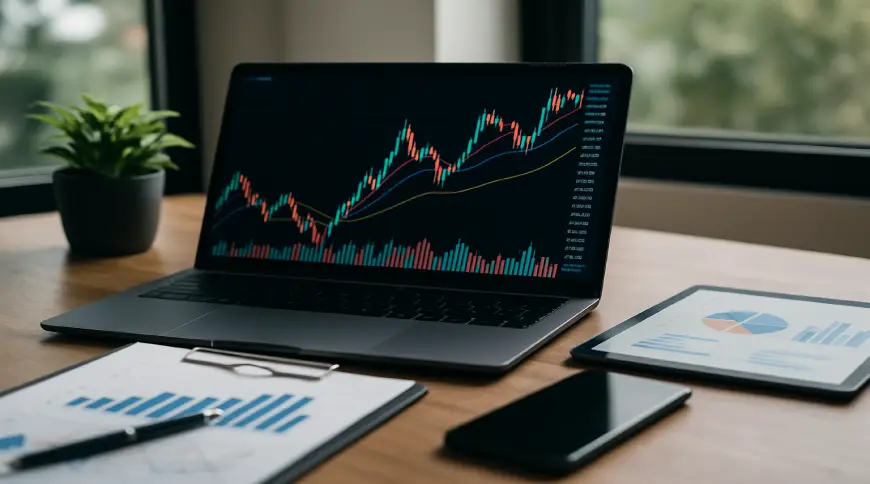
In the world of trading, many still rely on the classics — RSI, MACD, Bollinger Bands — the holy trinity of traditional technical analysis. But let’s be honest: markets today are no longer the same playground they were a decade ago. With the rise of high-frequency trading, social media-driven sentiment shifts, and global events that can move prices within minutes, these tools often fall short.
Traditional technical indicators were never designed to handle the complexity, speed, and noise of today’s markets. They focus on historical price movements, assuming the past will repeat itself in predictable ways. But markets have become more nuanced — and so should our tools.
This is where AI-driven market analysis comes into play.
Rather than relying on fixed rules and backward-looking patterns, AI-driven tools adapt, learn, and evolve in response to the market. They analyze massive datasets in real time — from price action and volume to news sentiment, Reddit threads, and even your trading behavior.
Modern traders don’t just want data; they crave insight. And artificial intelligence offers a new lens — one that sees beyond the chart, connects dots across platforms, and turns chaos into clarity.
In this article, we’ll explore how these innovative tools are changing the game and highlight some of the best platforms empowering traders to move beyond traditional analysis — into the future of trading.
Why Traders Need More Than Just Indicators
Let’s face it — after a few months (or years) in the markets, most traders start to feel a kind of déjà vu. You’ve seen every RSI dip, every MACD crossover, every textbook double-bottom pattern. And yet, the results don’t always align with the theory. Welcome to pattern fatigue.
The problem? Over-reliance on indicators like RSI and MACD leads many traders into a trap — chasing signals without understanding the bigger picture. These indicators can be helpful, but they’re also lagging, rigid, and based entirely on historical price movement. They tell you what happened, not what’s happening — and indeed not why it’s happening.
That’s where many traders hit a wall:
There’s a gap between signal and insight.
A flashing green light on your screener doesn’t mean it’s a good trade. It doesn’t account for news events, market mood, or even your trading psychology. Indicators miss context — and in today’s volatile, hyperconnected markets, context is everything.
What traders need is a tool that goes beyond patterns. One that learns from behavior, adapts to new conditions, and offers actionable insight — not just alerts. This is precisely where AI-driven market analysis becomes the edge.
Instead of giving you “yes/no” signals, these systems provide layers of understanding: sentiment shifts, risk probabilities, alternative scenarios, and even introspective feedback about your strategy over time.
Because in modern trading, knowing what is less potent than understanding why — and acting before everyone else sees it on their indicators.
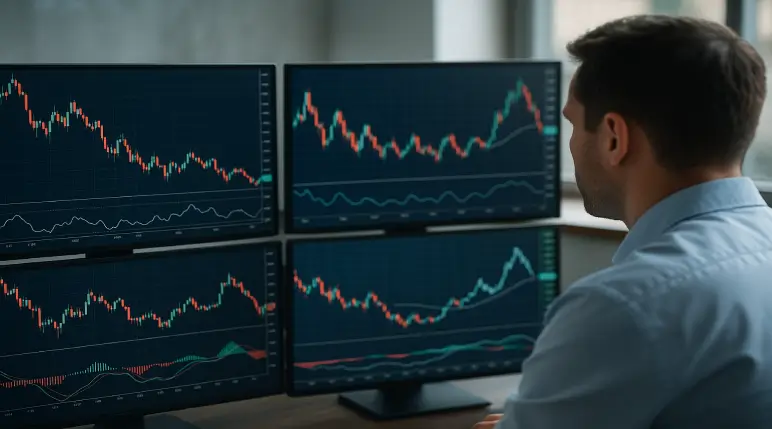
What Makes a Tool Truly “AI-Driven”?
In a world buzzing with tech jargon, the term “AI-driven” gets thrown around far too casually. Slap some automation on a dashboard, and suddenly it’s branded as “smart.” But here’s the truth: automation isn’t intelligence — it’s just efficiency. What sets a truly AI-driven market analysis tool apart is its intelligent learning capabilities.
A real AI-powered system does more than follow pre-programmed rules. It observes, analyzes, and evolves. It’s designed to learn from new data, refine its understanding, and improve its recommendations — all without requiring manual updates. This is the core of machine learning and deep learning, the engines behind genuine AI.
But intelligence in trading goes one step further: it adapts to the trader.
Every trader has a unique style, including risk tolerance, preferred setups, emotional triggers, and market focus. The best AI-driven tools don’t just watch the markets; they watch you. They notice which patterns you trade, how you respond to losses, when you tend to break your own rules — and they adjust accordingly.
And on the macro level, these tools don’t just scan charts. They listen to the market’s voice — analyzing news, social sentiment, global headlines, earnings reports, and even Reddit chatter. In other words, they measure market sentiment, not just price action.
So when you ask, “Is this tool AI-driven?” — ask this instead:
- Does it learn over time?
- Does it adapt to different conditions and behaviors?
- Does it give insight, not just information?
Because the future of trading doesn’t belong to those who use more tools — it belongs to those who use more innovative tools.

Top AI Tools for Market Analysis (With Use Cases)
Let’s move from theory to tools — real platforms that are redefining how traders approach the market. These aren’t just fancy screeners; they’re AI-driven market analysis engines that go beyond price action and candlestick patterns. Each of them brings something unique to the table — whether it’s predictive modeling, behavioral insight, or emotional sentiment tracking.
Here are five standout tools — and how creative traders can use them:
1. Trade Ideas – AI-Powered Scanning and Alert Engine
Meet Holly, the in-house AI assistant from Trade Ideas. She doesn’t sleep. She spends every night running millions of simulated trades based on various strategies — adjusting risk levels, timing, and filters.
Use Case:
Day traders use Holly to generate high-probability setups before the bell even rings. You can backtest her suggestions, compare results, and even mirror trades in real-time with brokerage integration. Think of it as outsourcing your pre-market brainwork to a data-crunching genius.
2. Kavout (Kai Score) – Smart Stock Rating Using Deep Learning
Kavout blends fundamental and technical data with deep learning to create its “Kai Score” — a predictive ranking from 1 to 9 for individual stocks. The model ingests financial statements, analyst ratings, news trends, and price history.
Use Case:
Swing traders or long-term investors use the Kai Score to shortlist fundamentally sound stocks with upward momentum. Instead of spending hours reading earnings reports, they let Kavout do the heavy lifting — algorithmically.
3. Tickeron – Pattern Recognition with Predictive Accuracy
Tickeron’s AI scans thousands of charts in real-time, identifying patterns like cup-and-handle, triangles, flags, and more — with built-in probability scores based on past performance.
Use Case:
A pattern-based trader can set alerts for only high-confidence patterns, e.g., those with a historical success rate of greater than 70%, and receive predictive price ranges. It’s pattern recognition without the guesswork — and with the stats to back it up.
4. Sentiment Investor / Alternative Data AI – Social + News Sentiment
Markets move with the mood. Platforms like Sentiment Investor, Accern, or MarketProphet track alternative data by analyzing social media, news articles, forums, and earnings calls using NLP (Natural Language Processing) to detect sentiment shifts before they are reflected in the charts.
Use Case:
If you’re trading tech stocks and see a spike in negative sentiment around “Apple supply chain issues” hours before the price reacts, that’s your edge. Perfect for news-sensitive traders and those who believe psychology drives price.
5. TrendSpider – Hybrid AI + Human Technical Analysis
TrendSpider isn’t pure AI — and that’s its magic. It combines automated trendline detection, backtesting, and multi-timeframe analysis with tools that enable you to verify, adjust, and build upon the insights.
Use Case:
Traders who love technical analysis but hate redrawing trendlines can save hours. The AI spots breakout zones, tests your strategy across years of historical data, and even syncs with alerts and automation bots.
Each of these platforms contributes to a new generation of AI-driven market analysis, empowering traders not just to follow the market but to understand and anticipate it creatively.
And here’s the best part: these tools don’t replace your intuition — they sharpen it.
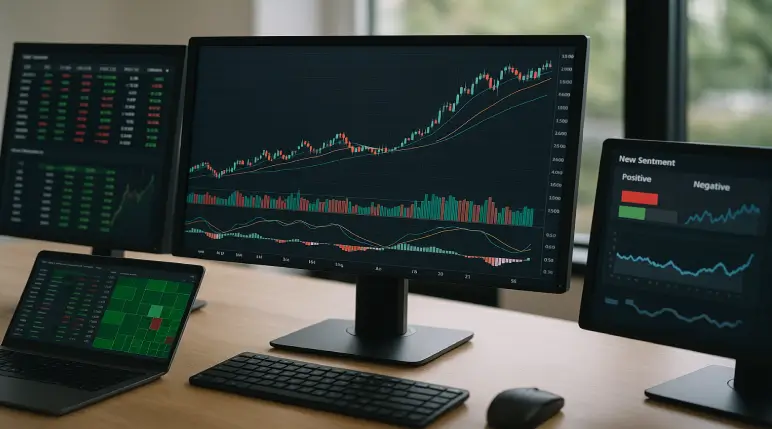
Creative Use Cases: Beyond Entry and Exit
Most traders utilize AI tools for one primary purpose: to achieve better entries and exits. But the real power of AI-driven market analysis lies in what it can do before and beyond the trade. These tools aren’t just about spotting breakouts — they’re about understanding the market like a living, breathing organism.
Let’s explore some creative use cases that go far deeper than green and red arrows:
1. Spotting Behavior Shifts Before Chart Shifts
Price is always the last thing to react. By the time a breakout happens on your chart, smart money has often already moved.
AI can pick up early behavioral signals — such as a sudden change in volume across related assets, a shift in sentiment on social media, or an unusual spike in options activity — before they appear in a clear trendline. This kind of anticipatory edge is what separates reactive traders from predictive ones.
Example:
An AI system might detect an increase in bullish language surrounding a sector on Reddit or Twitter hours before it is reflected in the price. You get the chance to position early — not chase the move.
2. Using AI to Filter Noise, Not Just Detect Patterns
The market is noisy. Every second, thousands of data points fight for your attention — indicators, news flashes, opinions, fakeouts.
A well-designed AI-driven tool acts like a noise-canceling headset for your charts. It filters out irrelevant data, focuses only on statistically significant signals, and helps you stay focused on high-probability setups — not distractions.
Example:
Instead of showing every MACD crossover, your AI tool learns which ones have historically been profitable for your specific trading style, particularly in particular market conditions. That’s true signal clarity.
3. Emotional Bias Detection Through Journaling Integration
Trading is just as much an emotional as it is a technical endeavor. But most platforms ignore the human behind the trades. Some cutting-edge tools now integrate AI with journaling apps, analyzing your decisions over time to identify patterns of emotional bias.
Did you exit too early every time you were down the previous day? Did you ignore your system after a string of losses? These platforms spot it — and nudge you back to discipline.
Example:
You get a weekly AI-generated report: “Your win rate drops by 20% when you trade more than three times a day.” That’s insight you won’t get from a chart — but it could save your account.
These creative use cases prove one thing: AI-driven market analysis is no longer just about strategy — it’s about self-awareness, precision, and adaptability. It’s a partner in your growth, not just your trades.
Red Flags: Not All “AI” Tools Are Equal
In today’s noisy fintech landscape, slapping “AI” on a product is like putting “organic” on a cereal box — it doesn’t mean it is. Many so-called AI-driven market analysis platforms are nothing more than glorified rule-based screeners with shiny dashboards.
So how do you separate the real intelligence from the buzzword hype?
🚩 Buzzword Marketing vs. Real AI (ML/NLP/Deep Learning)
Here’s the truth: real AI relies on advanced methodologies, such as machine learning (ML), natural language processing (NLP), and deep learning, to process massive amounts of data and become smarter over time. These tools:
- Learn from new data
- Adapt to different market environments
- Predict with increasing accuracy as inputs evolve
By contrast, many tools that call themselves “AI” are just running fixed logic:
“If RSI < 30 and volume increases, then buy.”
That’s not intelligence — it’s a formula. It doesn’t evolve, it doesn’t personalize, and it doesn’t respond to new market behavior.
If a platform can’t learn from its mistakes or improve its recommendations over time, it’s not truly AI — no matter how good the UI looks.
✅ How to Test If a Tool Truly Learns and Adapts
Before investing your money (or your trust), put the platform to the test:
1. Ask the Hard Questions:
- Does the tool update its models regularly using new market data?
- Does it personalize its insights based on your trading behavior?
- Can it incorporate unstructured data (like news, tweets, or earnings calls)?
2. Look for Evidence of Adaptability:
- Does it recognize when a previously successful pattern starts to fail?
- Does it adjust probability scores or remove signals that underperform?
- Can it explain why it’s making a specific recommendation?
3. Try Before You Buy:
The best AI tools offer transparent backtesting, demo environments, and changelogs showing model updates. Use them. Test the tool across different assets, timeframes, and market conditions. See how it evolves — or doesn’t.
Conclusion
In this article, we explored the evolving world of AI-driven market analysis — a space where trading tools no longer follow rules, but learn and adapt to changing conditions. From understanding why traditional indicators like RSI and MACD fall short, to discovering creative and real-world applications of modern AI tools, it’s clear that the future of trading lies in thoughtful, adaptive insights, not just static signals.
We examined standout platforms like Trade Ideas, Kavout, Tickeron, and others — tools that not only help traders make informed decisions but also understand why those decisions matter. We also highlighted how AI can help you go beyond entries and exits by spotting behavioral shifts, filtering market noise, and even recognizing your emotional biases.
But perhaps most importantly, we sounded the alarm on flashy “AI” tools that offer automation without accurate intelligence. Fundamental AI-driven tools don’t just react — they evolve, learn from data, and adapt to the trader’s needs.
As markets become more complex and competitive, the edge won’t come from having more indicators — it’ll come from combining human creativity with machine intelligence.
The smartest traders in the next decade will be the ones who ask better questions — and use more innovative tools to find the answers.


